HAPPY EASTER – THE BEAUTY AND TRAVAILS OF LIFE IN PALESTINE

P1120357

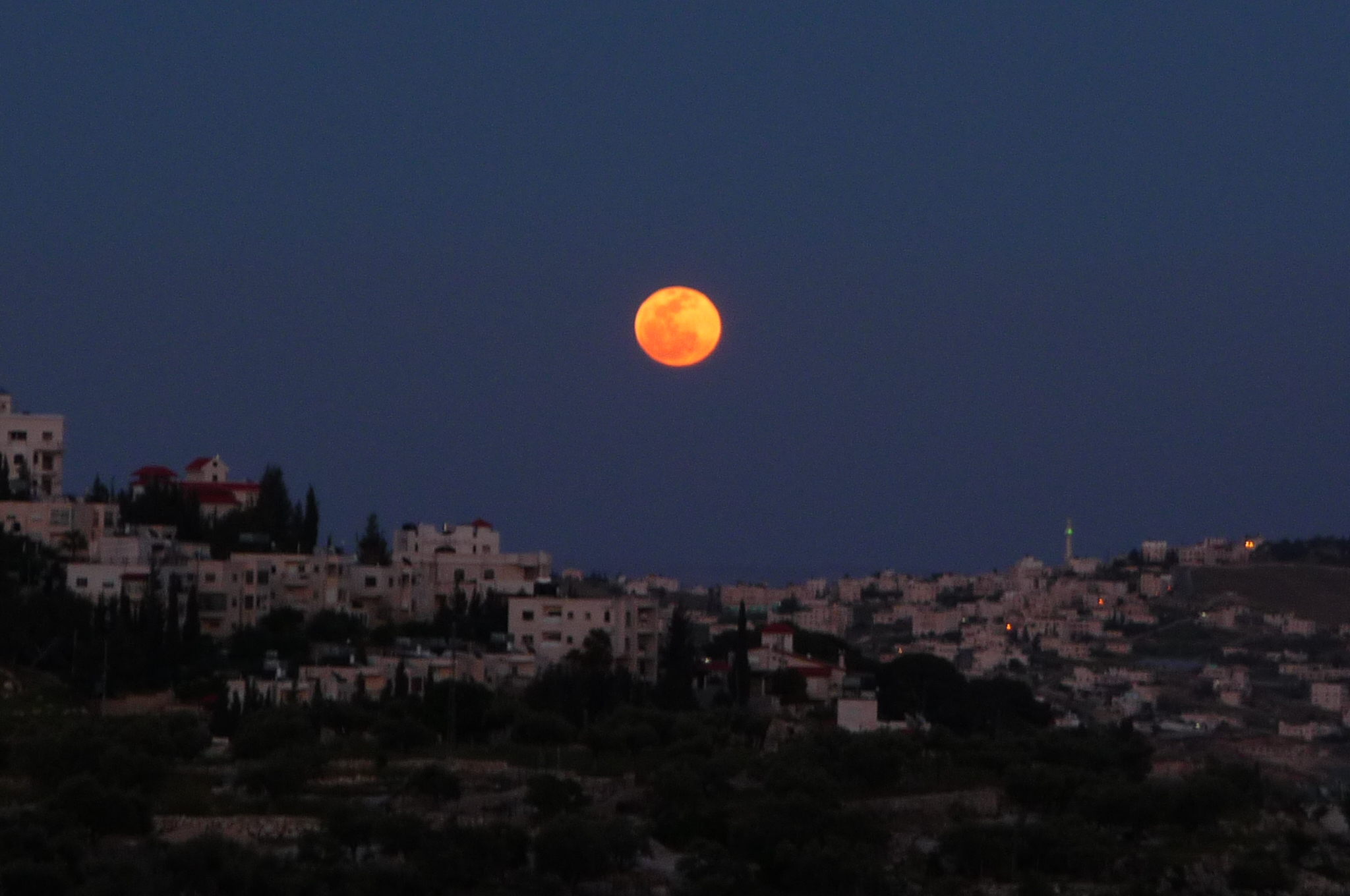
I will start with the Beauty. Last night, Easter Eve, I enjoyed the most amazing moon rise I think I’ve ever experienced. Apparently this was the blood moon. Could it have been more timely? This was taken from the balcony of the apartment where I’m staying in Bethlehem.

P1120347

And this shot was taken from the same vantage point the other morning, capturing the beautiful sky shortly after sunrise.

IMG_0658

The apartment complex is lively, full of children’s voices, barking dogs, roosters crowing and the occasional baaaa of a sheep or goat. This is up the road a bit from the apartment building, along my walk to stores and the old city.

P1120344

Here is a sneaky shot I took from a window in the apartment.  It’s a little enclosure some young guys had erected with mattresses in the corner of a playground where they shoot the breeze, check their cell phones and smoke sheeshi.

For my fellow Living Waters Pilgrims and Grace Lutheran-ites, I was able to attend Good Friday service at Christmas Lutheran Church and I got there without getting lost! I was worried about not getting enough exercise during my month here. So far, that has turned out to be of little concern as it’s a good 5K walk even when I don’t get lost with a long hill with a seemingly vertical incline coming out of the apartment complex.

P1120341

There are all sorts of beautiful little spots along the way and a very lively and intriguing market along the way.

It was a well attended service, of which I understood very little as it was all in Arabic (no surprise there), but I knew the general order of the service and to top it off, Bishop Munib Younan was there to deliver the sermon.

IMG_0660

Although I couldn’t follow it, it was interesting to see him in this context. He is quite the dramatic orator. I left a little early as it was getting dark and I was intent on not taking a cab home.

Today, I attended Easter Service. It was a beautiful, sunny morning which made for a very enjoyable walk. I don’t think I mentioned that the walk takes me smack through Nativity Square.

IMG_0669

As would be expected on these days, the square was absolutely packed with cars and people.
IMG_0662

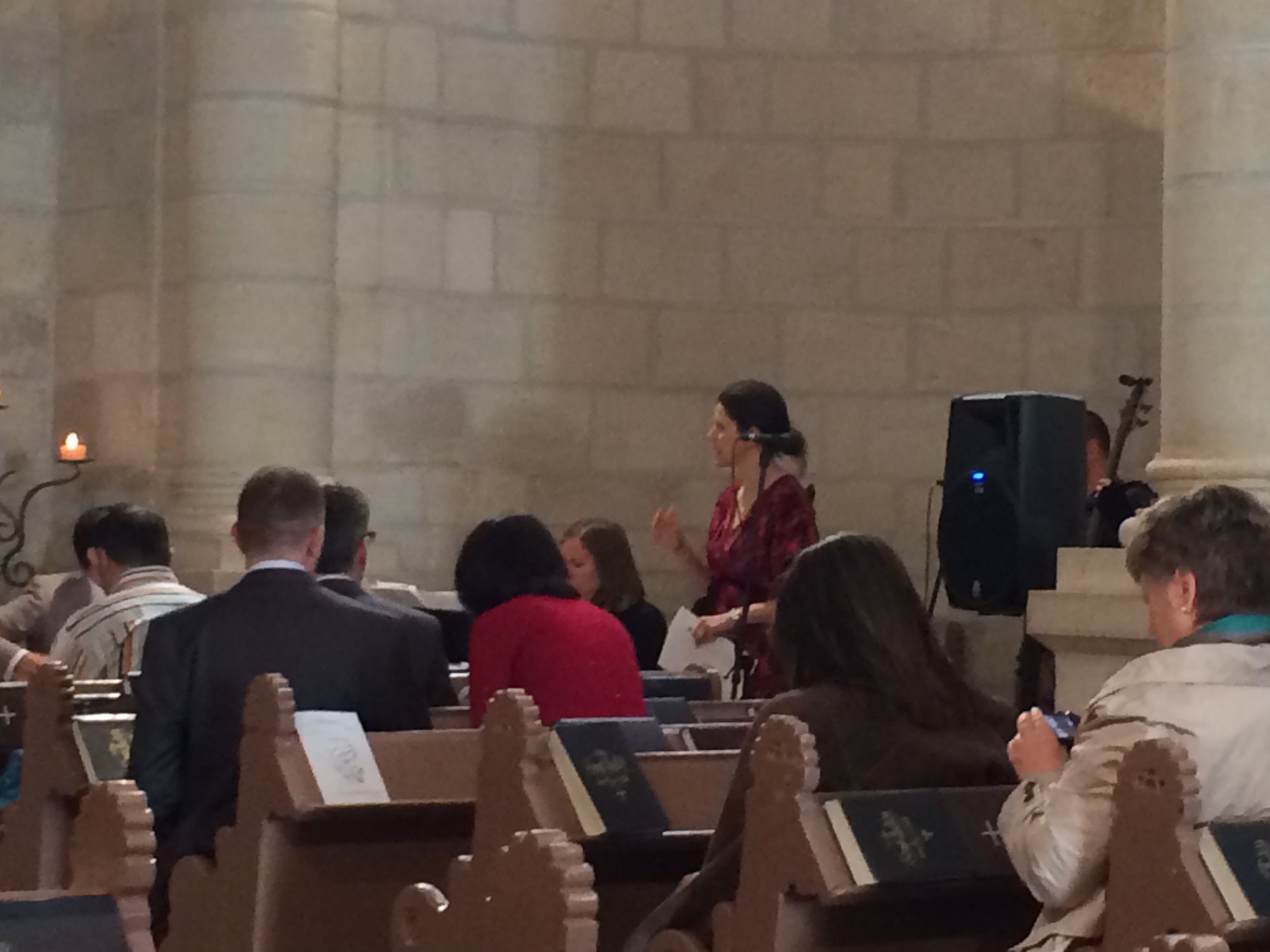
This service was particularly enjoyable because there was a  service bulletin in English. This picture was before the service as the church was filling. I wanted to get a shot of that little girl with her fancy dress. There were quite a few young girls who were really dolled up.T
IMG_0664

he same very talented musicians who participated in the Friday service also led much of the singing this time.  I met the woman in red afterwards. Her name is Ghada and she is Palestinians but was raised in Jordan and eventually married an American. She is here with her husband from Florida working at a Christianschool here in Bethlehem.

IMG_0666

This is an upside down shot of the ceiling with a little bit of the organ.  This is the first Easter in at least 20 years that I haven’t played the organ. It felt a little strange.

In true Lutheran form, these Palestinians sang loudly and exuberantly.

I was able to chime in an Alleluia every now and then and sing along on the hymns which were transliterated in the bulletin. I also had jotted down a transliterated version of the Lord’s Prayer, so I was able to sing along with it – in a fashion.  When I flipped to the page in the Arabic hymnal it took me aback to see that they even write their music from right to left. That would take a little getting used to. I guess you could always use a mirror.

After the service, I met Ghada and her husband Jeff and walked over to Mitri’s house where he hosted an after church get-together. This is when I finally got to say “hello” to him and he was able to make the connection with this persistent woman who had been e-mailing him over the past months. I look forward to talking more to him about what I’m doing here later this week.
IMG_0670

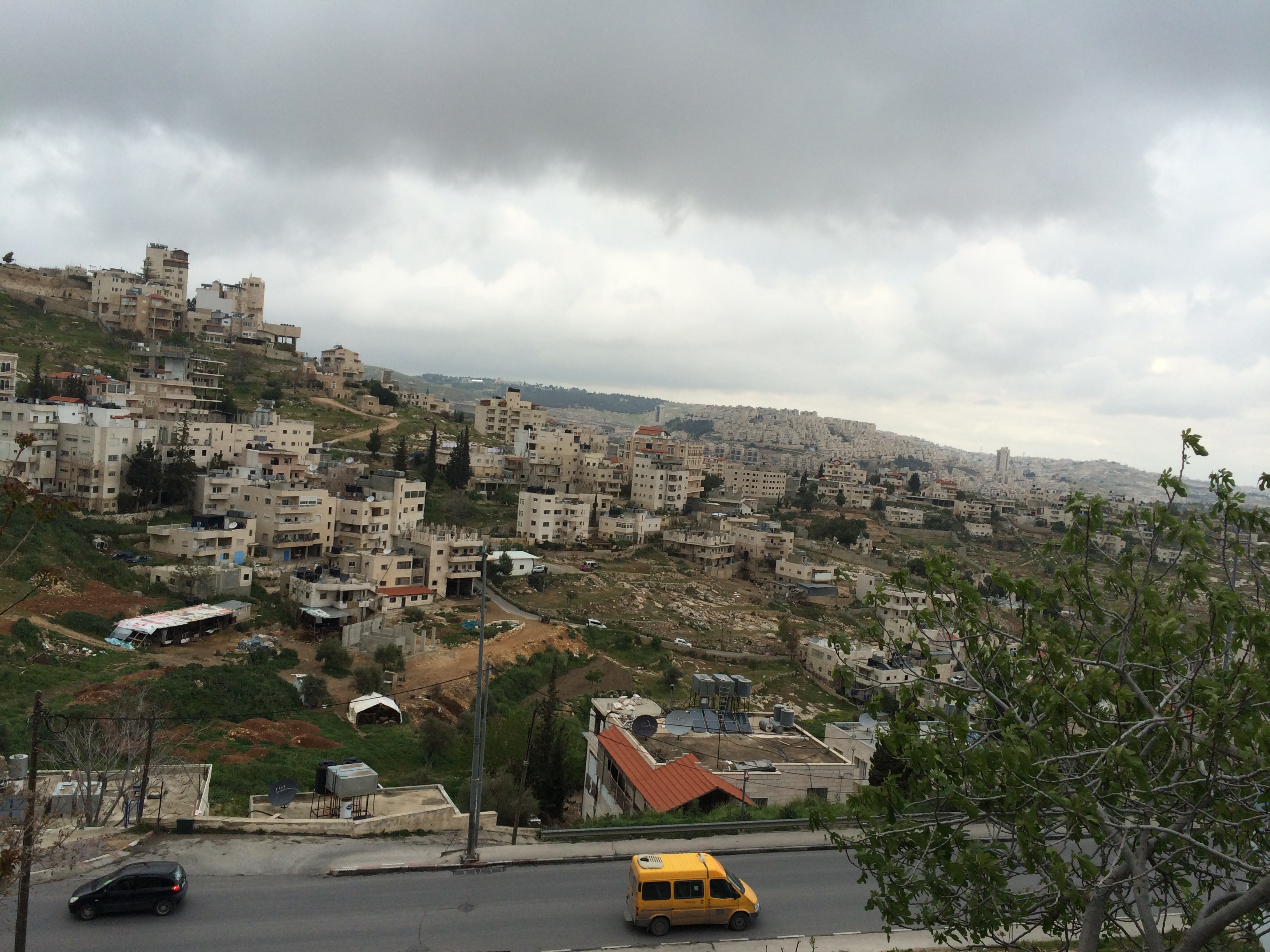
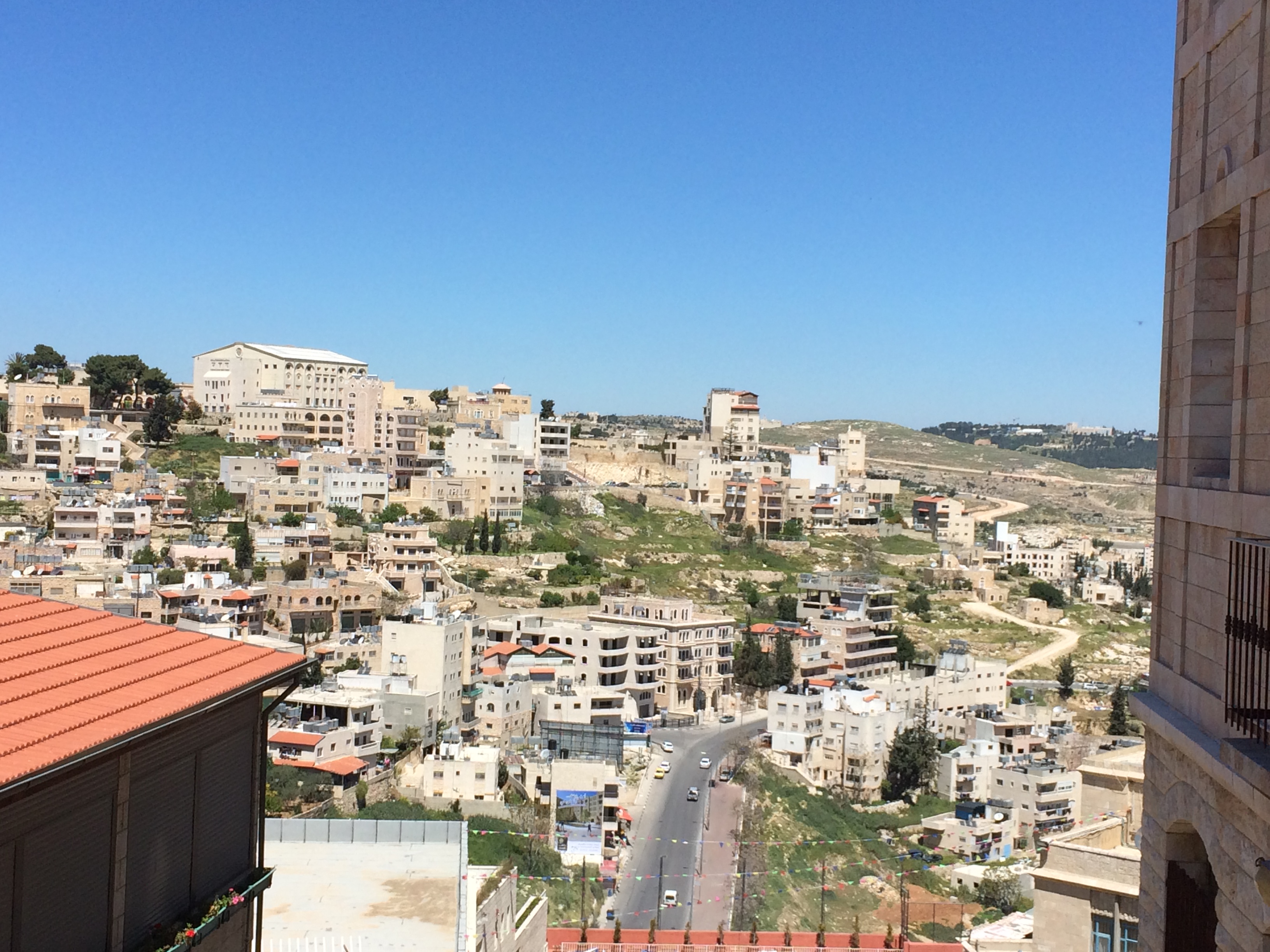
The walk back was also beautiful. The old city sits atop a large hill. This photo is taken from the edge of Nativity Square.

IMG_0653

One of my favorite parts of the walk is a very long stair case in the side of the hill that creates a bit of a short cut from walking the winding road down.  On the way down sits this chicken coop with a tree growing through it. To me it is a sign of how Palestinians love and respect nature.

P1120342

Here’s another little bit of nostalgia for the Living Waters peeps. I stumbled upon this the other day when I was quite hopelessly lost getting back home from my Serveese drop-off.

So, now for the not so good news. The hot water stopped working a couple of days ago. My hair was so in need of a wash, I finally heated water on the stove, and washed it in the sink – no big deal. But, as of yesterday, I have no water. at all – hot or cold.  When I informed my landlord, he came over and took me up to the roof of the building – it’s 8 stories and no elevators.  Well, actually there are elevators but they’re non-functional because electricity is so expensive. At the top of the building, every apartment has a water tank.  He thought that perhaps the valve had been shut off by a hostile neighbor. Unfortunately for me, that was not the case; the tank was dry. These tanks are filled periodically when the Palestinian Authority releases water. As most of you know, water is a very precious commodity in this part of the world. When your tank runs dry, that’s the end of your home’s water supply until the next allotment comes. He assured me that it would probably be today, but so far, the taps remain are dry. Fortunately there are a lot of bottles filled with water which you can bet I am using very judiciously. I am thankful for my time roughing it at our family camp where similarly, when the pump down by the lake breaks, we have no running water. The difference is, we can go down to the lake to bathe and to draw water. Here there is no such option.

And the kicker is, although a huge portion of Israel’s water comes from aquifers under the West Bank (Palestinian territory), those water resources are fully controlled by Israel. Here are a few sobering (and infuriating) facts and figures. As aptly put in this article http://www.haaretz.com/news/middle-east/1.574554 in the Israeli newspaper, Haaretz: “Israel has adopted a drip-feed approach to providing the Palestinians with water instead of letting them control their own natural resource.”

The result  is that the West Bank is allotted ¼ of the water resources from its own territory as is allotted Israel. And Israel has its own resources on top of that. This leaves the  2.7 million Palestinians living in the West Bank with a huge water shortage and a per capita use of  less than 100 litres per day,the WHO’s minimum standard for health and safety.  And keep in mind that to attain even this substandard amount of water, the Palestinian Authority has the piled on indignity of being forced to buy desalinated water from Israel. So, not only is the fresh water of the West Bank siphoned off at the whim of Israel, Israel profits from selling desalinated water to Palestine. And adding insult to injury, water flows freely to the ½ million or so illegal Israeli settlers of West Bank who consume about 600 liters per day and freely water their lawns and fill their swimming pools.

I stated my wish that every American could spend time in Palestine to witness first hand their culture and the difficulty of life under occupation. I would now add to that: and to experience first hand what it is like to not have enough water because your own water is being stolen from you.

So, that was one my travails, which I might add, I feel sheepish even calling a travail, because for me this is a very temporary situation, while for Palestinians, it is every day life. Moreover, things in Gaza are ever so much worse.

The other minor inconvenience was my long, and expensive trip back to Bethlehem from Hebron on Thursday which I had mentioned in my last blog post. Well, it turns out that there wasn’t an accident that caused the Serveese drivers to have to take a longer, more circuitous route. It was a lovelorn Israeli man who staged a fake kidnapping to impress his girlfriend.  http://972mag.com/israeli-fakes-own-kidnapping-palestinians-pay-the-price/105262/  This little prank could well have caused another onslaught in Gaza, as did the kidnapping of the three teenagers last summer.

“Israelis were enraged by Asraf’s “prank” [because the huge operation to catch the “perpetrator/s cost millions of shekels] yet somehow managed to ignore the army’s regular, violent response. Media outlets failed to report on the fact that thousands of people were put under collective punishment Thursday night, and how, once again, they were the victims of searches, checkpoints and arrests — because they are Palestinians. Because the ends justify the means. Because they are used to it. What difference does it make? And, let’s face it, they deserve it.”
HEBRON – HOT SPOT OF PALESTINE

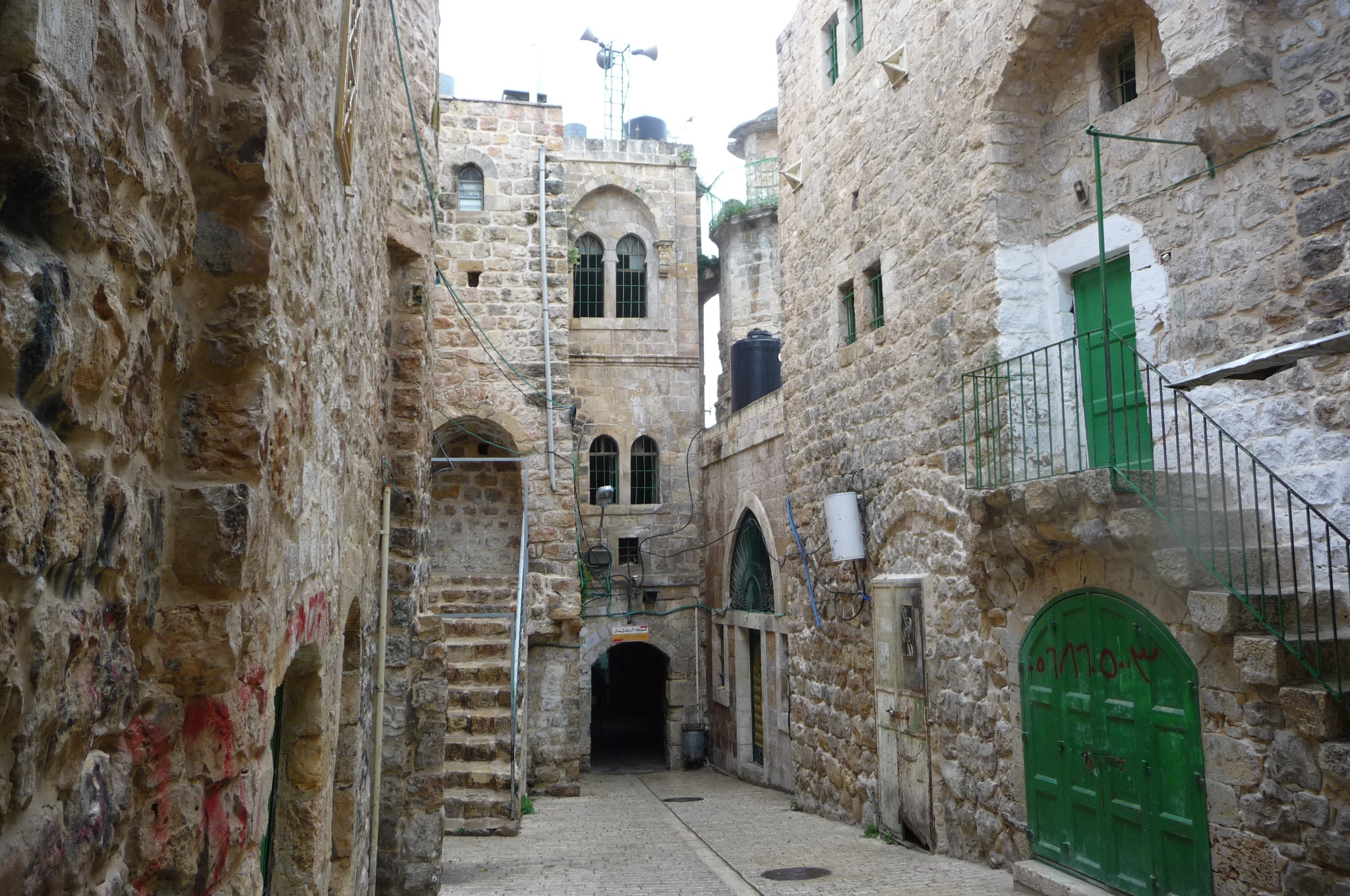
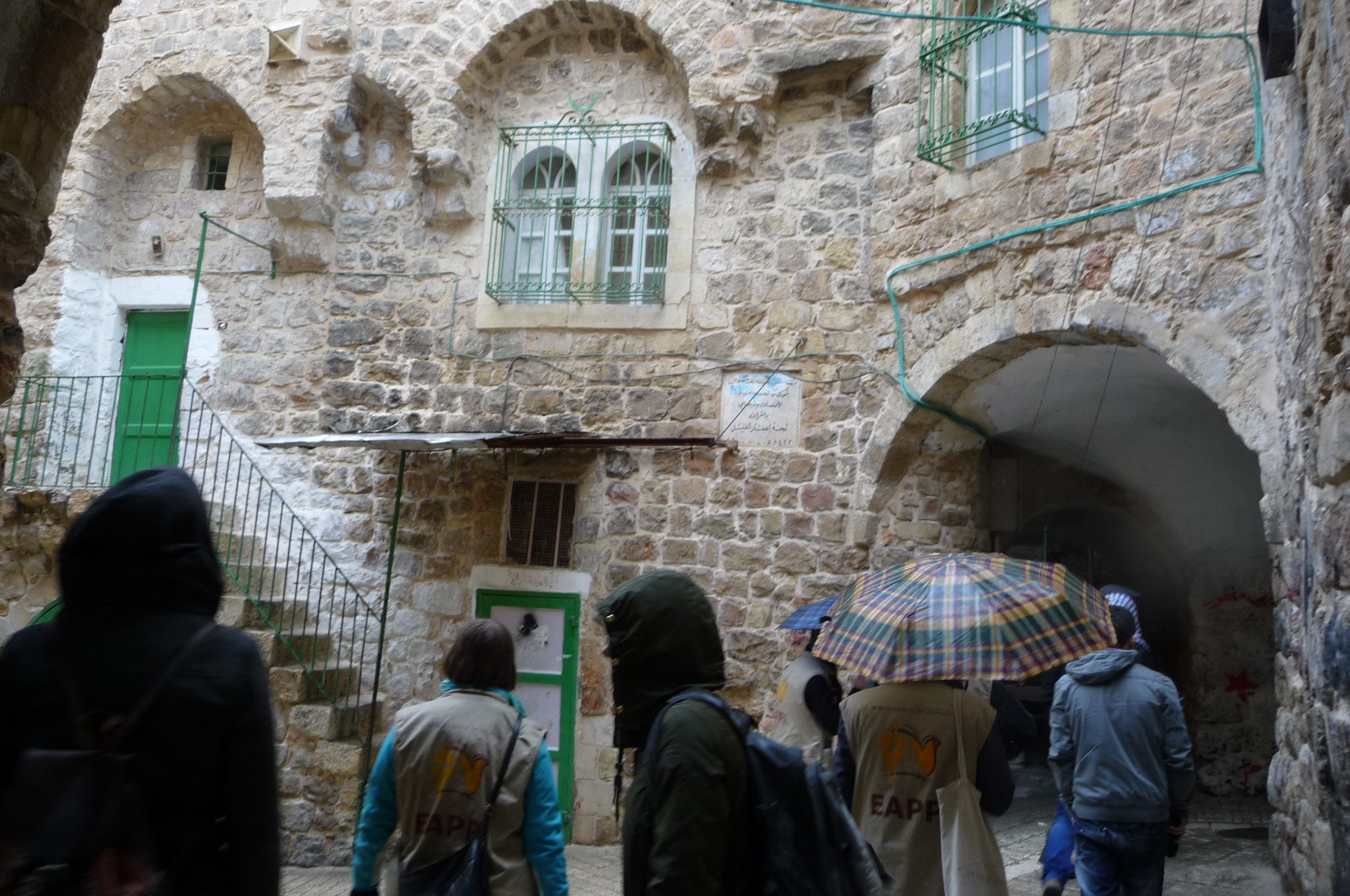
Wednesday was my first day of work at the Hebron Rehabilitation Committee (HRC). It was a cold, rainy day, the first of this kind of weather I’ve experience in the Holy Land. I couldn’t see a lot during the drive from Bethlehem to Hebron because it was so foggy, but there was a certain ethereal beauty with the fog in the craggy hills.  I was greeted at the Service stop by a driver sent by HRC to take us into the old city. There were two other women in the car, one from EAPPI  https://www.eappi.org/en one of the several volunteer human rights monitoring organizations and another who is also working in the legal department at HRC. We were escorted into a meeting room in HRC’s beautifully, restored, old-city building.

P1120314

There were a number of other EAPPI volunteers there with whom I received a brief greeting from the director, and then an orientation about HRC and its work. HRC’s primary objectives are:

  1. Preserve the cultural heritage by maintaining the constitutional elements of old buildings, as well as preserving the whole urban fabric .
  2. Revive the Old City by consolidating ties with the population, reusing abandoned buildings, upgrading the infrastructure and connecting the Old City to the city’s other parts.
  3. Counter and limit Israeli settlements inside the Old City by surrounding          settlements with inhabited buildings to prevent their horizontal expansion; and to avert the urban inter connection of these settlements by increasing Arab demographic density between them.

You can read more about HRC here.

http://www.hebronrc.ps/index.php/en/about-hrc/mission-and-objectives

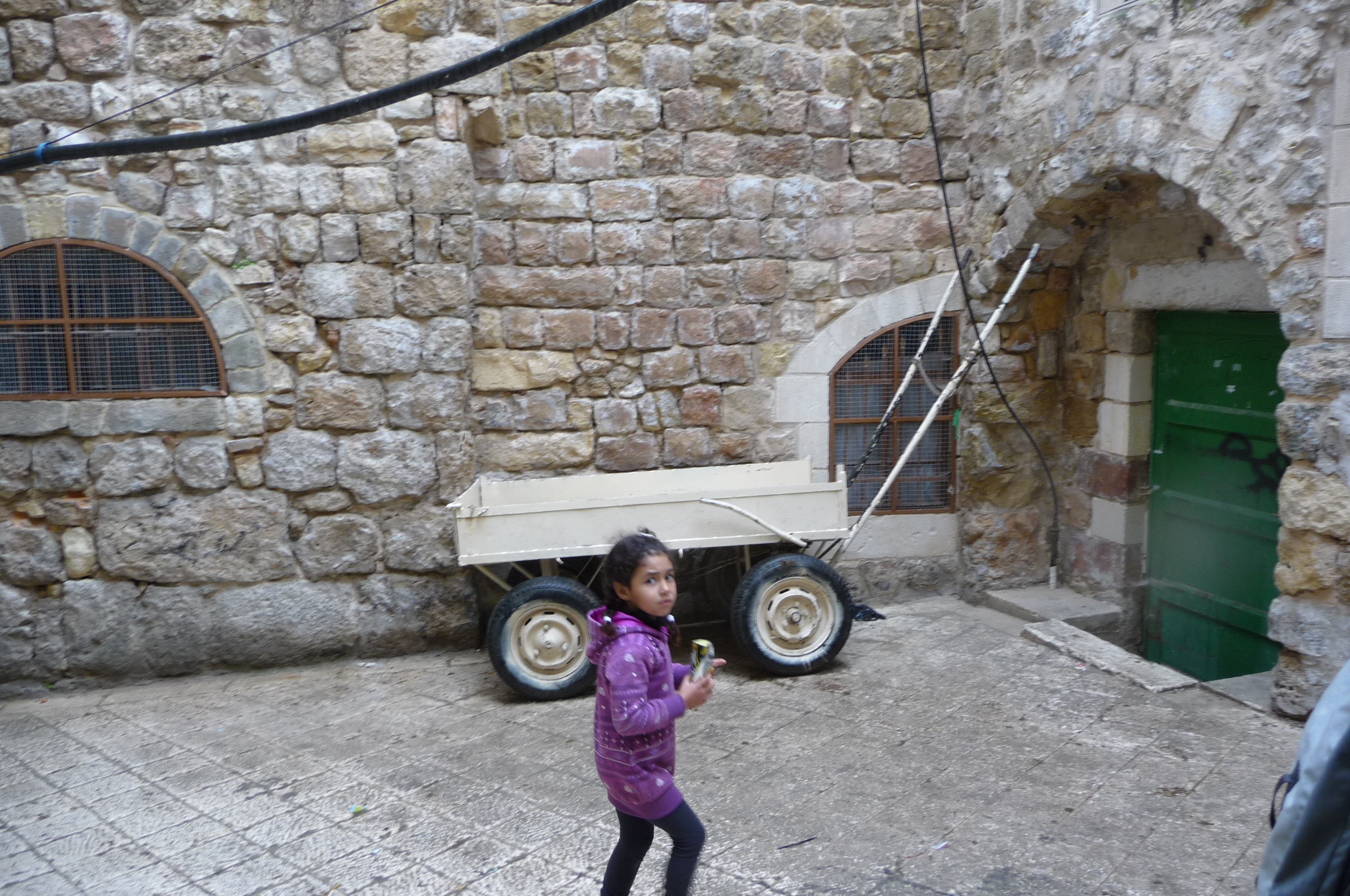
We were then given a tour through the old city by Sammy, the official go-to guy.  Sammy is from the Czech Republic and has been living in Hebron and working for HRC for nearly 7 years. The buildings that HRC has restored are beautiful. They truly capture charm of this ancient city.

P1120313

P1120317

P1120315

But as the tour progressed, we witnessed the mess that Israel’s apartheid system has made of Hebron. I knew about the sad situation of Hebron prior to my visit, but seeing things with your own eyes has a way of hitting you over your head. So we have a large city which has been almost exclusively Palestinian for over 800 years, it lies deeply with the green zone that was designated as Palestinian Territory by the UN after it was clear that the creation of the state of Israel in Palestine was never going to be accepted by the indigenous population; but because of some mythical ties dating more than 2,000 years ago, a group of radical Jews (many from the Bronx) have decided that it is their duty to reclaim Hebron, and for that matter the entire West Bank. This, not surprisingly, led to violence which led to Israel’s crackdown on Hebron and  and its Palestinian inhabitants. I will devote an entire post to the events that led to this outrageous crackdown.

It started small, as it did with most of the other illegal settlements in the West Bank; here with a group renting some hotel rooms during Seder and then refusing to leave. With various sources of funding from Zionist philanthropists and often fraudulent schemes, they managed to buy buildings in the old city and before you knew it, there were several hundred settlers. It would be one thing if they would simply deign to co-exist with the long-time residents, but these people came in with the objective of reclaiming the place and the Israeli army has supported them. The settlers in the old city now number between 400 and 1,000 and army personnel are by some estimates almost one to one.

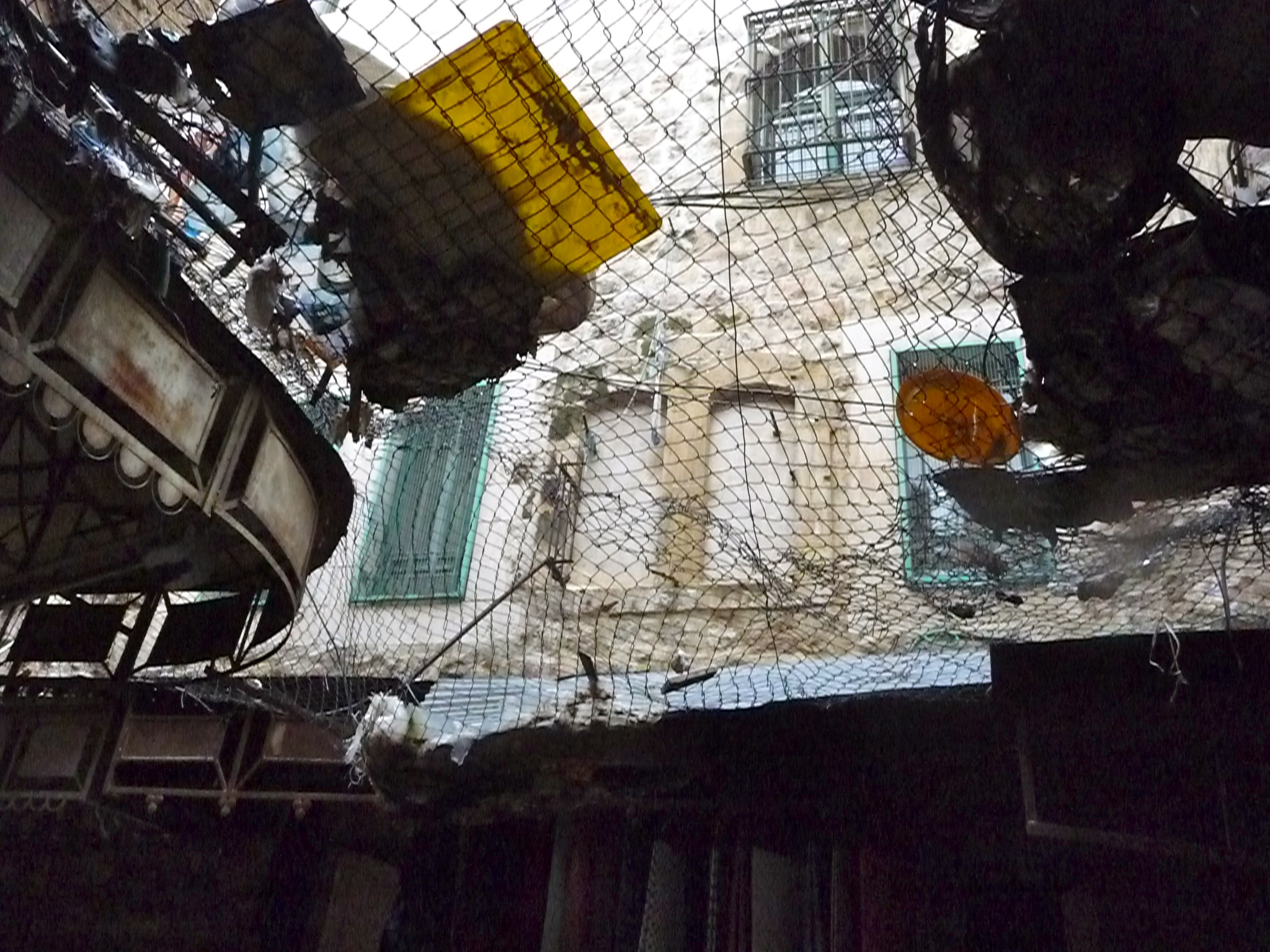
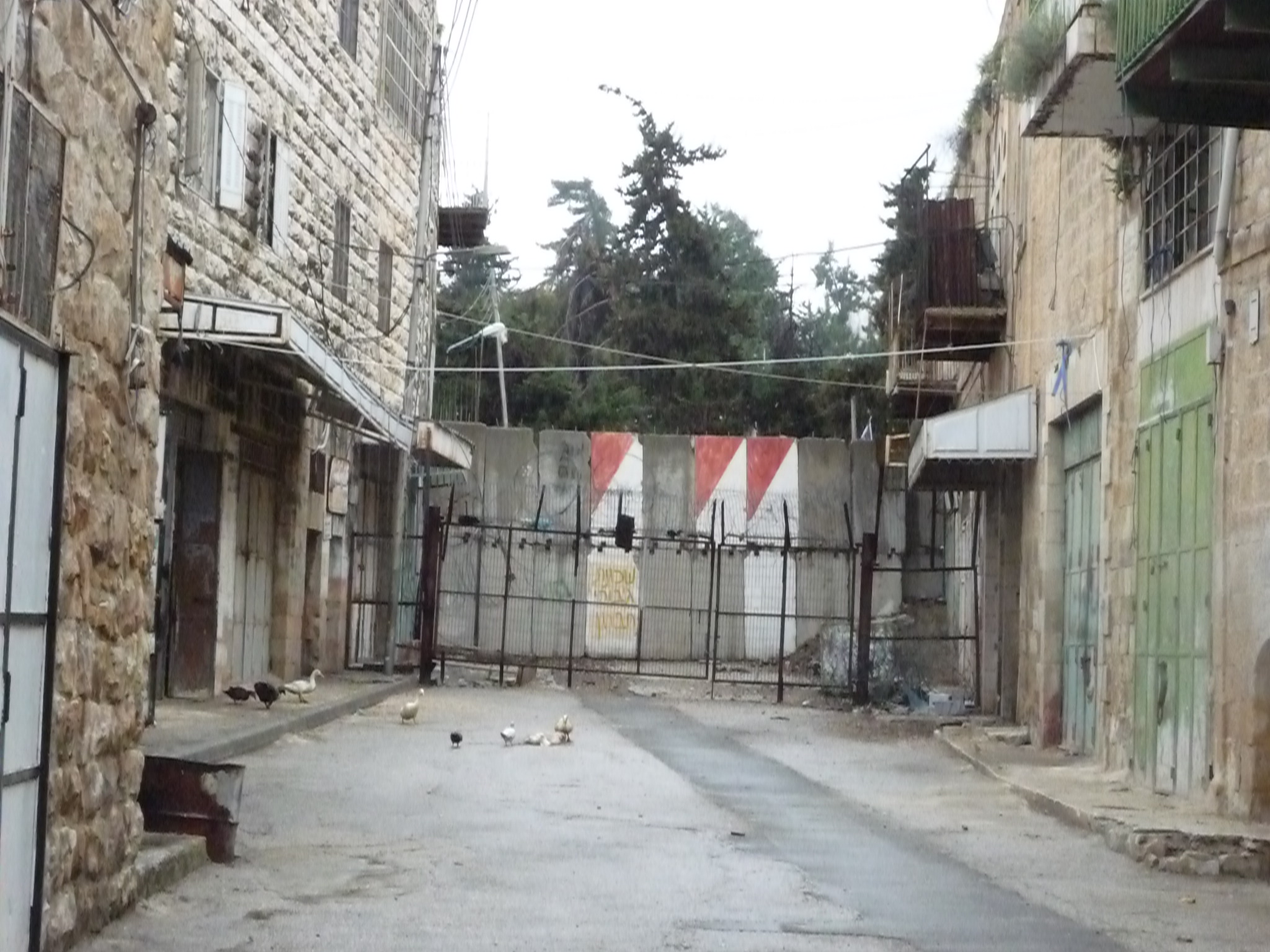
The worst of it is, many of these settlers are incredibly hostile and violent and they can do virtually anything to a Palestinian, short of killing them with complete impunity. This next picture is in an area of Palestinian commerce bordered by a settler area.  The merchants have had to erect nets over the street to catch the debris and garbage that the settlers regularly lob down at them. Sammy told us that he was once drenched with a bucket of some woman’s dirty wash water.  It could have been worse – sometimes it’s human waste.

P1120324

In the rare instance in which settler violence is prosecuted, the punishments are so minimal as to almost add insult to injury. When Palestinians complain to or seek help from an Israeli soldier because of harassment or violence from a settler, the response is almost uniformly, both tacitly and sometimes outright, “We are here to protect the settlers, not you.” And because of the violence, Palestinians are barred from Shuhada Street, the main street of the old city. This has had the effect of shutting down over 1,000 businesses and virtually destroying the economy.

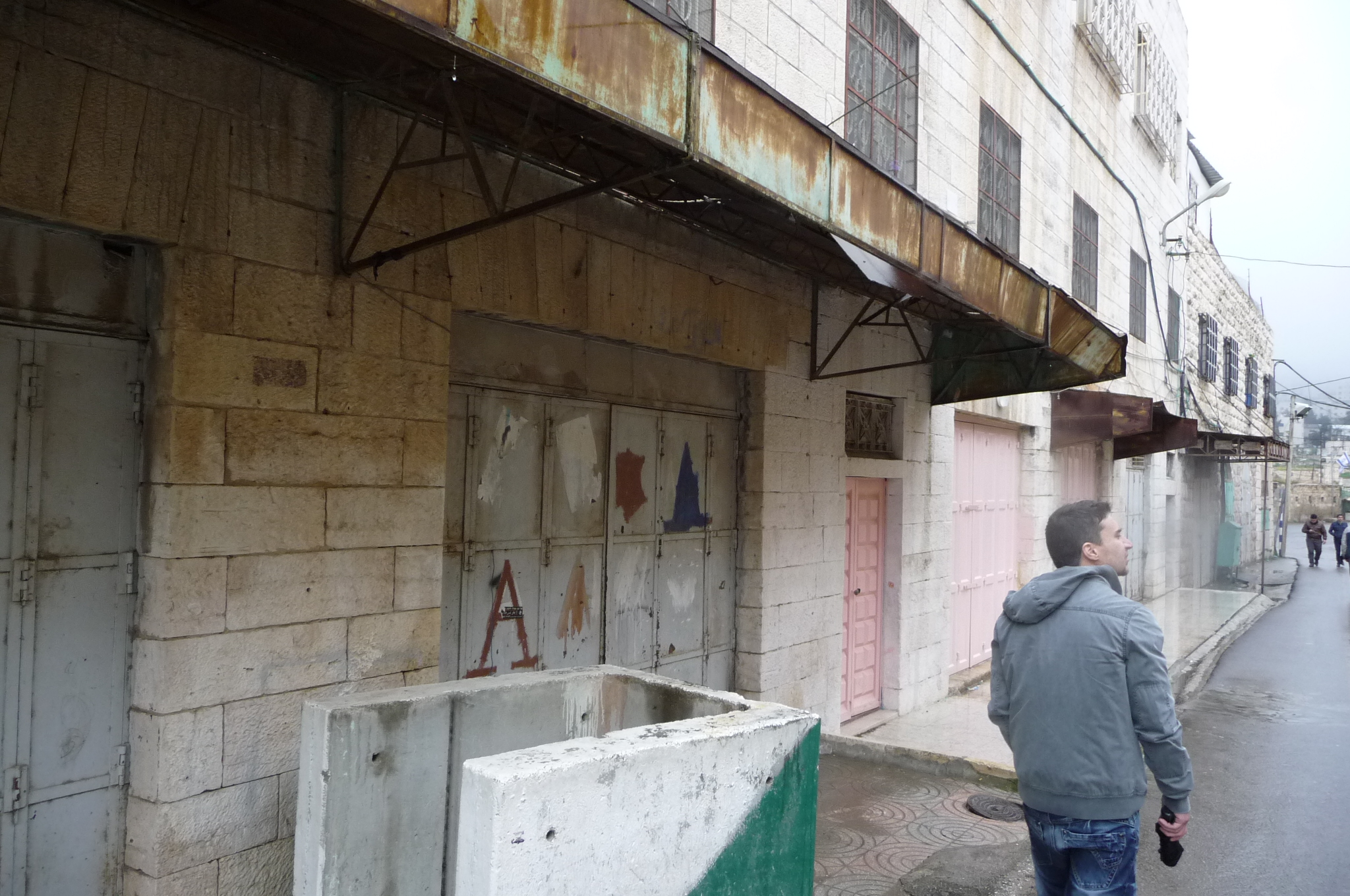
There are ten check points in the old city to ensure the settlers that they won’t have to bear the indignity of encountering a Palestinian. The effect of this has been the closure of the busiest street of the old city and the resulting closure of 100s of shops.  Settlers are free to walk the street there as is virtually anyone else except a Palestinian.   Oh, when we were entering one of the checkpoints, the EAPII volunteers were not allowed in. The Israeli soldiers don’t like these types of because they have done an excellent job of documenting the ongoing abuses of both settlers and Israel security forces.

P1120329 P1120328

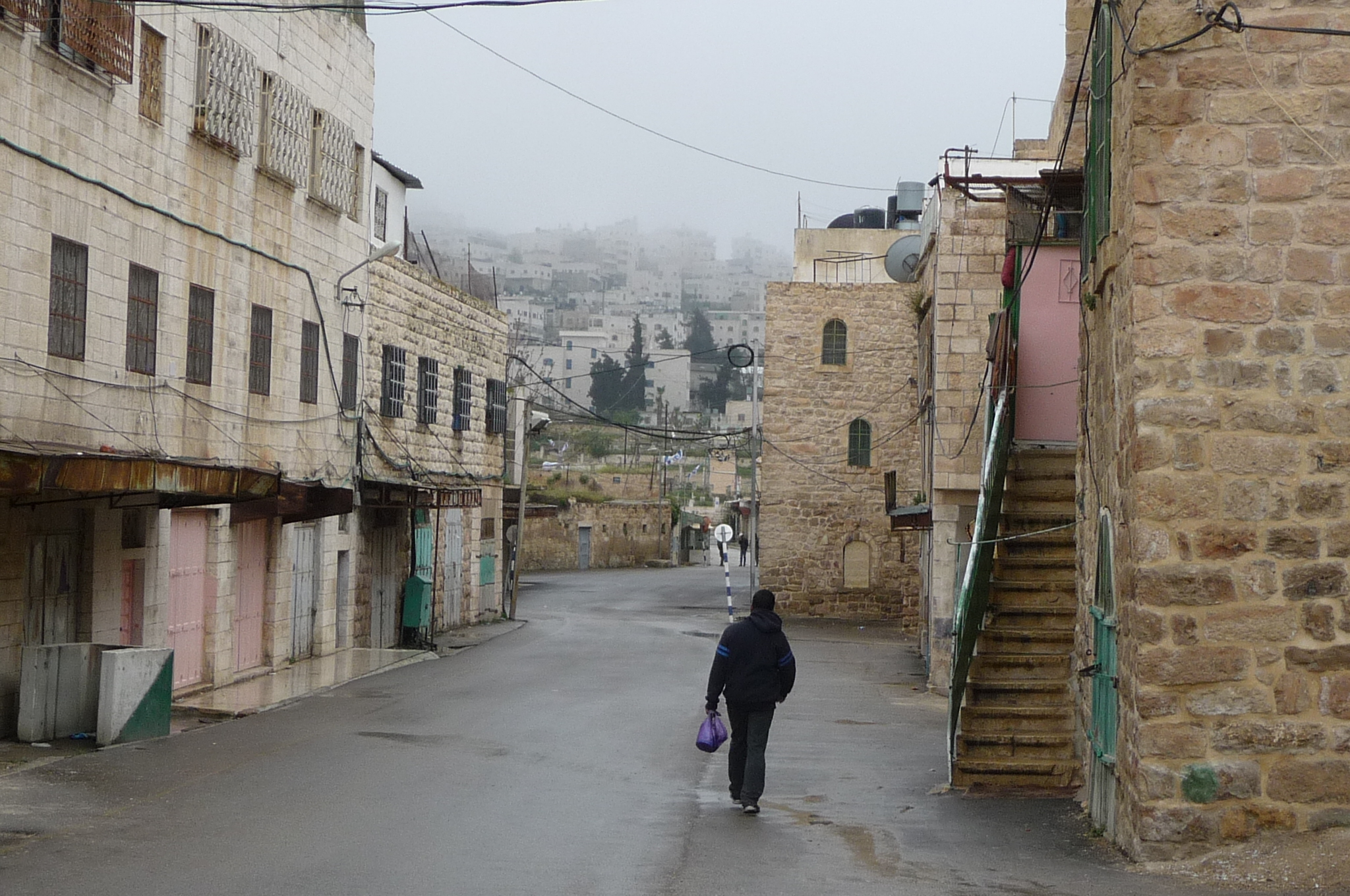
These two pictures are on Shuhada Street which you can see is virtually empty now.

There are about four Palestinian shops that remain open on Shuhada Street. No one knows exactly why they are allowed, but Sammy speculated that it was to deflect from the impression that the entire street had become a ghost town.

P1120322

What about the Palestinians whose houses and shops face Shuhada Street? Their doors have been literally welded shut, some while the inhabitants were still inside. Some of the stalwart Palestinians who remain have constructed elaborate means of exiting through back windows, and erecting ladders to climb over roofs and get to the part of the old city in which they are allowed. As life has become unbearable for these Palestinans, many have abandoned their homes. Israeli law supposedly prohibits settlers from occupying them, but that hasn’t stopped them from trying.

Not only were the indigenous inhabitants banned from the main street of their city, many side streets are now blockaded because they traverse Shuhada Street. What this means is that in many cases, a route that would have been 100 meters or so now involves traversing a route of 4-5 kilometers.

P1120323

More about the history of Hebron here, including a section talking about the remarkable strides HRC has made in restoring the old city.

http://palestine-studies.org/jps/fulltext/41377

FIRST DAY IN HEBRON – GETTING THERE

The day after my arrival in Bethlehem, I was off to Hebron for my introduction to the Hebron Rehabilitation Committee. Getting lost, of course was the order of the day, but fortunately, there was an HRC person at the van drop off point to greet me.

IMG_0650

A word about public transportation in Palestine: none. What they do have are taxis, which are expensive and vans called Service (serveez). Even though Palestinians pay taxes, most are funneled through Israel and Israel frequently withholds the funds that are due Palestine at its whim; most recently when the Palestinian Authority had the hutzpah to seek membership in the International Criminal Court. Palestine also must pay Israel for all of its electricity and water, even though all of its water comes from the West Bank. This is a fact of life in an occupied territory – there’s no money for such luxuries as public transportation.

The Service are Caravan type vehicles all in school bus yellow. They typically have room for 7 passengers. When the van is full or near full, the driver takes off to the destination. Hebron is about 22 K (app 14 miles) from Bethlehem, and the ride takes about one-half hour and the charge is supposed to be a flat 9 shekels (about $2.50). Considering that the gross per capita income here is not much more than $3,000, that takes a big bite out of one’s pay check.

So, of course (in keeping with the trend I’ve set) I had troubles getting the Service. The first day, the Hebron drivers were apparently on strike, so I ended up paying for a cab which was much more expensive. Finding one for the return trip involved getting lost in the city of Hebron and finally figuring out where the Bethlehem bound Services were lined up. The second day, I waited at the corner where I was told Hebron bound Services pass. In theory, you can wave one down, and if there is space, they will happily stop to pick you up. After at least three passed, I finally took the hike to the bus station where I picked one up. Leaving Hebron this tie, a nice guy from HRC offered to walk me to the Hebron station, but it wasn’t 9 shekels, it was 15 because there was “a bad accident” and they had to take a different route. I was convinced that this was one of those “I have a special price for you” deals, and when I asked the driver if this price was just for me, everyone in the van snickered and assured me that the accident story was for real. Again, though, I was struck by how very expensive it is for people living on 3K a year to be paying this much to commute from work and school.

CHECKPOINT – IT’S A BREEZE LEAVING ISRAEL

After finally unloading the car, I got a cab to take me to the checkpoint between Jerusalem and Bethlehem. I had to ask several people before anyone seemed to comprehend what I was asking. I guess it’s not that common for women – or especially western looking women – to walk into the West Bank. As a matter of fact, when I got there, there was not a single woman in sight. There were dozens of Palestinian men, probably mainly workers who were going home from their jobs in Jerusalem to their homes in Bethlehem. Suffice it to say, I caught many strange glances. I was expecting to have to show my passport and be admitted. In fact, all that was involved was a walk though several turnstiles (installed to prevent a mob?), and a winding circuitous route through cement wall tunnels. It fell like going through a rat’s maze – walking probably ten times the distance required. I quickly snapped this photo, not wanting to be too obvious. You can see the wall and the watch tower and the caged area which is where you enter the maze. No problems at all leaving Israel. We’ll see what it’s like when it’s time to come back in. I was greeted by my host in his car who escorted me to my very comfortable home for a month in Bethlehem.

Déjà vu again – at Jaffa

The Holy Land Pilgrimage I attended last year immersed me in a group of 38 very different people with really just one common link – being Lutheran. I had never done a group tour before and was not at all sure it was going to be my cup of tea. To my pleasant surprise, I left the trip quite tearful having to say goodbye to so many wonderful people I had bonded with over those two weeks. One of the dearest of these was with Dorothy Beasley, a remarkable woman. She is a retired appeals court judge from the State of Georgia and has a lot of other impressive credentials like having served on the International Criminal Law Court. I can only hope that I will have as much spunk and half as many amazing stories as she does when I am her age. So, why I am talking about a pilgrimage from over a year ago?

Dorothy has a dear friend, Ilan Grappel who is a young Israeli whom she took under her wing when he was a law student at Emory (another one of her places of service). She was thrilled that he was able to meet us when we were in Jerusalem last year. We had a pleasant, albeit short meeting. Aside from the fact that Ilan is very bright and the even more interesting fact that he spent several months in an Egyptian prison while traveling there because they thought he was an Israeli spy, his mother plays viola in the New York Philharmonic. Anyway, when Dorothy heard of my trip back to the Holy Land, she immediately started e-mailing both Ilan and me to make sure that we arranged a meeting in Israel. I think that Ilan felt more a sense of obligation to Dorothy than any burning desire to meet up with me in following through with this.

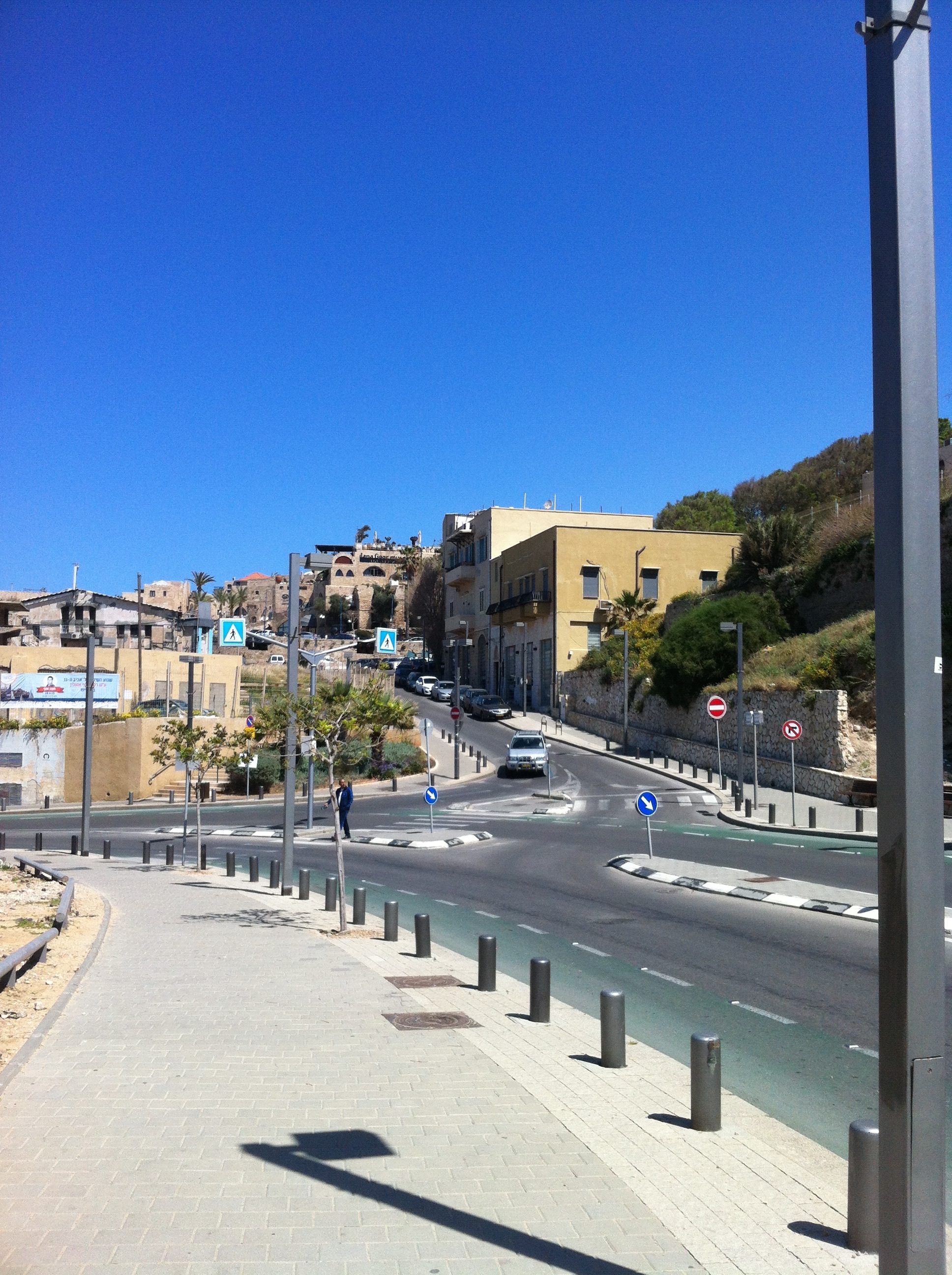
After I checked out of the Ruth Daniel Residence in Jaffa, Ilan met me and we had a beautiful stroll through old Jaffa and down to the port.  This is a view along the way. Image 2

The plan was to have lunch. As we wandered along the port, the one restaurant that looked appealing was the very one where we 39 pilgrims had our first meal upon landing in Israel. It was exactly the same crazy spread of probably 20 different little plates with various sauces (hummus and baba ganoush of course), salads and spreads. I had intention of retracing my steps from the last trip, but this was a very pleasant and unexpected exception. Aside from the annoying fact that I can’t eat pita bread because of a gluten intolerance, it was – again – quite delicious and the view can’t be beat.

The conversation with Ilan was interesting and challenging. I would say that in spite his liberal Americanized thinking he is a pretty hard core Zionist. We had quite a time sparring and I have to admit, he probably won the debate, just because he would usually end up throwing a “fact” at me which I could not immediately counter. At this point in my immersion in this conflict, that happens rarely anymore. and it made me realize, that I need to continue to do my homework. That said, the one thing he fell back on more than a couple of times was the old “why do you care about this conflict so much when [insert conflict of choice] is ever so much bigger” straw man. The example he used was the Indian/Pakistan conflict which resulted in the partition of India into two states. I readily admitted that I have limited knowledge about that conflict, although it is certainly much closer to resolution that this one, and actually did result in a real partition rather than a a prolonged occupation); but also that I wasn’t terribly interested in it either (You can only focus on so many things at time). But the most important justification is that I feel that as an American, I have a particular obligation to be activist on this issue because of the obscene amount of aid that my government, on my tax dollar gives Israel every year (over $3 billion last year, plus another $1/4 billion DURING AND IN SUPPORT OF the assault on Gaza this summer. This is all handed over with no strings attached as Israel continues stealing land that once was regarded by virtually the entire world as the future Palestinian State. And nearly all of our elected members of the US Congress are bought and sold by lobbying groups, among which AIPAC is one of the very richest and strongest. That is why I have no shame whatsoever in putting my full focus on this conflict and not others, as horrible as they may be. All this said, Ilan was very decent, he did not get upset or call me any names and, I dare say, would have continued the debate, as long as I had wanted. That’s a lot more than I can say for quite few other people who I’ve engaged with on this topic.

After departing from Ilan, I had another nightmare ride in my rental car. Getting out of Tel Aviv was fairly easy, but Jerusalem was as bad or worse as the previous day. I think it took me a full hour of navigating in the dark (my mental fog, that is to say) in the City before I finally found the car rental. I was saying my hallelujas when I finally got that thing parked, dent-free and deposited the keys. Again, my advice to anyone who comes to Israel is, do not rent a car if you’re planning to spend a lot of time in the cities.