HEBRON – HOT SPOT OF PALESTINE

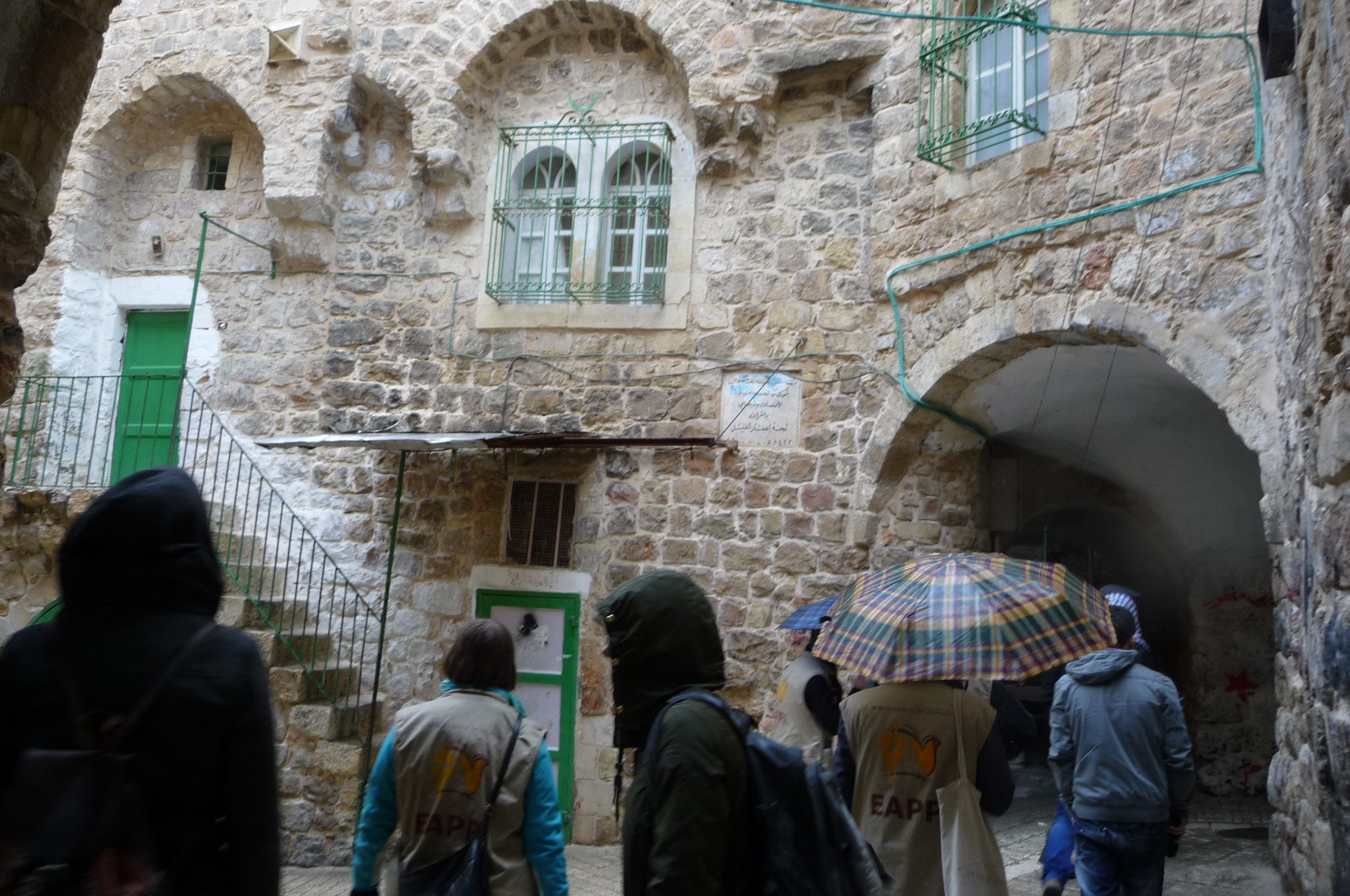
Wednesday was my first day of work at the Hebron Rehabilitation Committee (HRC). It was a cold, rainy day, the first of this kind of weather I’ve experience in the Holy Land. I couldn’t see a lot during the drive from Bethlehem to Hebron because it was so foggy, but there was a certain ethereal beauty with the fog in the craggy hills.  I was greeted at the Service stop by a driver sent by HRC to take us into the old city. There were two other women in the car, one from EAPPI  https://www.eappi.org/en one of the several volunteer human rights monitoring organizations and another who is also working in the legal department at HRC. We were escorted into a meeting room in HRC’s beautifully, restored, old-city building.
P1120314

There were a number of other EAPPI volunteers there with whom I received a brief greeting from the director, and then an orientation about HRC and its work. HRC’s primary objectives are:

  1. Preserve the cultural heritage by maintaining the constitutional elements of old buildings, as well as preserving the whole urban fabric .
  2. Revive the Old City by consolidating ties with the population, reusing abandoned buildings, upgrading the infrastructure and connecting the Old City to the city’s other parts.
  3. Counter and limit Israeli settlements inside the Old City by surrounding          settlements with inhabited buildings to prevent their horizontal expansion; and to avert the urban inter connection of these settlements by increasing Arab demographic density between them.

You can read more about HRC here.

http://www.hebronrc.ps/index.php/en/about-hrc/mission-and-objectives

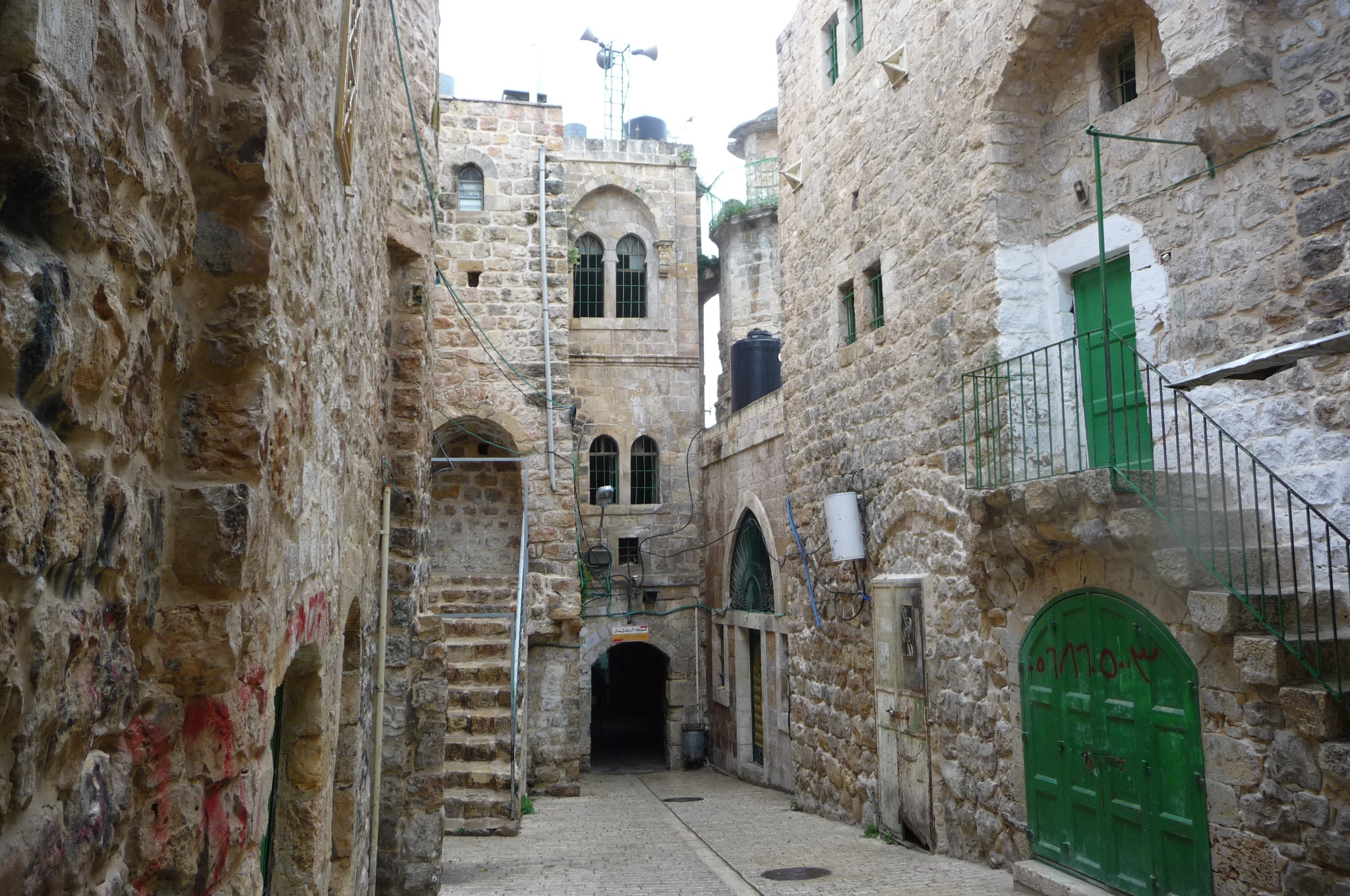
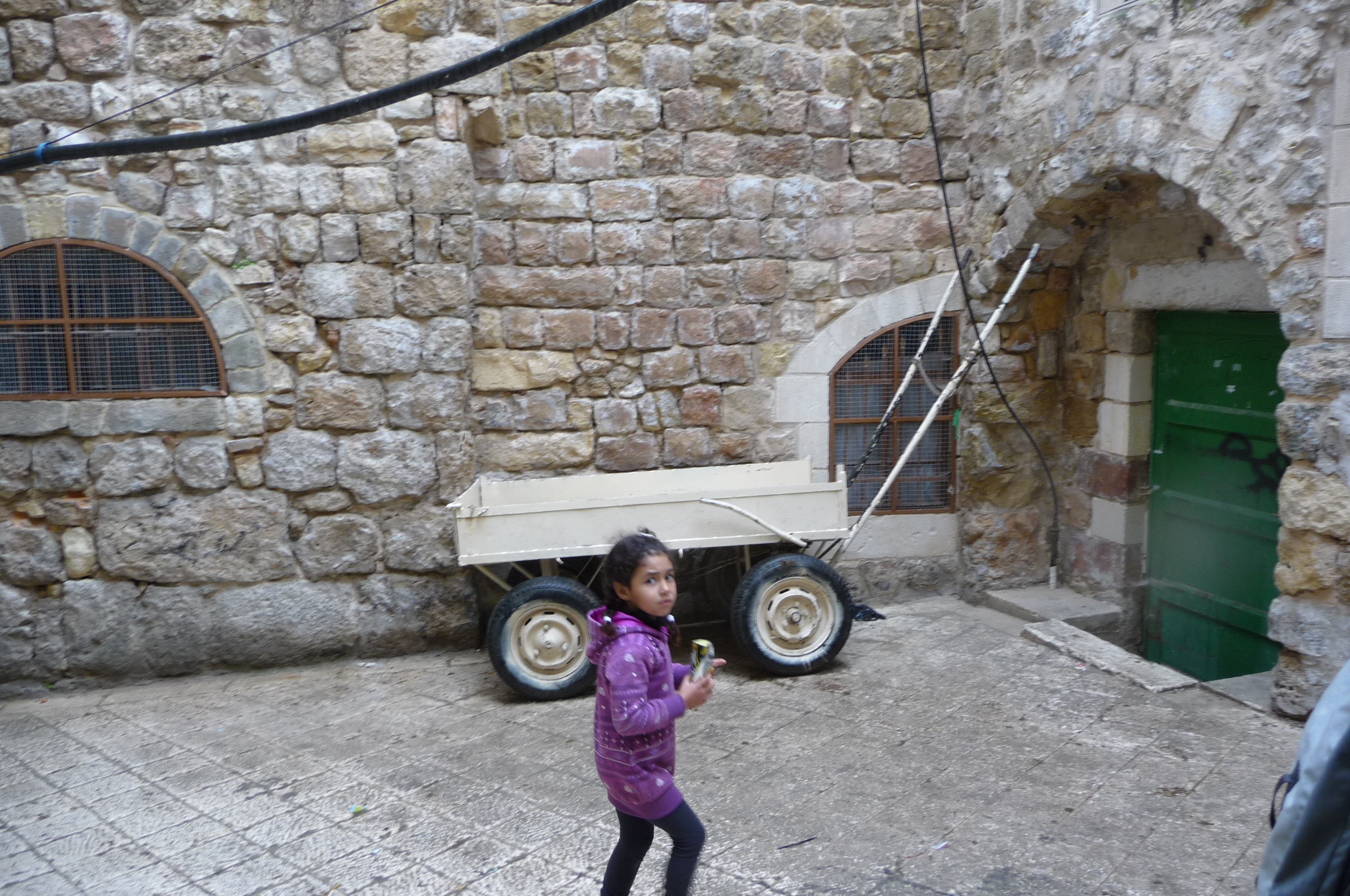
We were then given a tour through the old city by Sammy, the official go-to guy.  Sammy is from the Czech Republic and has been living in Hebron and working for HRC for nearly 7 years. The buildings that HRC has restored are beautiful. They truly capture charm of this ancient city.
P1120313

P1120317

P1120315

But as the tour progressed, we witnessed the mess that Israel’s apartheid system has made of Hebron. I knew about the sad situation of Hebron prior to my visit, but seeing things with your own eyes has a way of hitting you over your head. So we have a large city which has been almost exclusively Palestinian for over 800 years, it lies deeply with the green zone that was designated as Palestinian Territory by the UN after it was clear that the creation of the state of Israel in Palestine was never going to be accepted by the indigenous population; but because of some mythical ties dating more than 2,000 years ago, a group of radical Jews (many from the Bronx) have decided that it is their duty to reclaim Hebron, and for that matter the entire West Bank. This, not surprisingly, led to violence which led to Israel’s crackdown on Hebron and  and its Palestinian inhabitants. I will devote an entire post to the events that led to this outrageous crackdown.

It started small, as it did with most of the other illegal settlements in the West Bank; here with a group renting some hotel rooms during Seder and then refusing to leave. With various sources of funding from Zionist philanthropists and often fraudulent schemes, they managed to buy buildings in the old city and before you knew it, there were several hundred settlers. It would be one thing if they would simply deign to co-exist with the long-time residents, but these people came in with the objective of reclaiming the place and the Israeli army has supported them. The settlers in the old city now number between 400 and 1,000 and army personnel are by some estimates almost one to one.

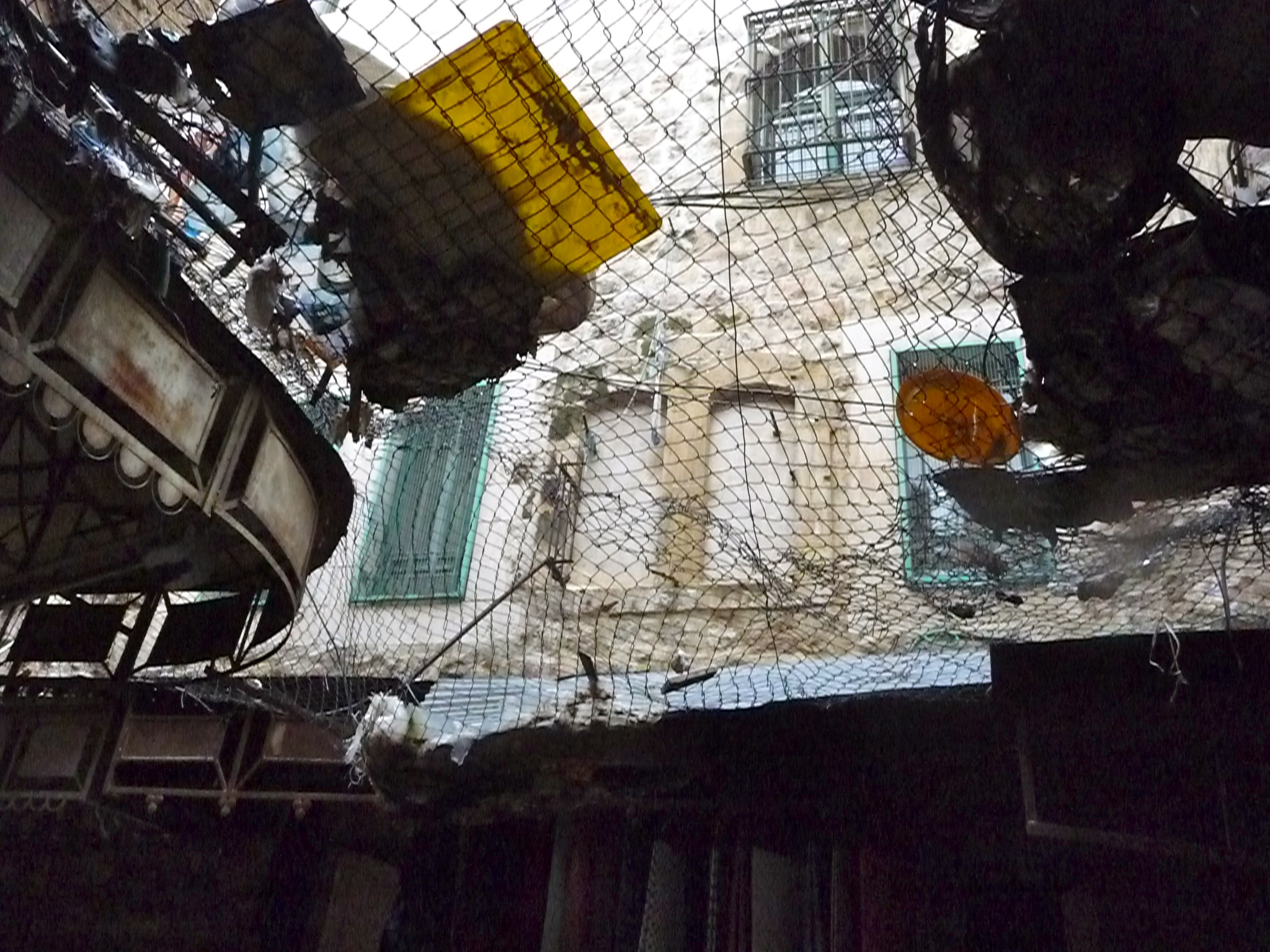
The worst of it is, many of these settlers are incredibly hostile and violent and they can do virtually anything to a Palestinian, short of killing them with complete impunity. This next picture is in an area of Palestinian commerce bordered by a settler area.  The merchants have had to erect nets over the street to catch the debris and garbage that the settlers regularly lob down at them. Sammy told us that he was once drenched with a bucket of some woman’s dirty wash water.  It could have been worse – sometimes it’s human waste.
P1120324

In the rare instance in which settler violence is prosecuted, the punishments are so minimal as to almost add insult to injury. When Palestinians complain to or seek help from an Israeli soldier because of harassment or violence from a settler, the response is almost uniformly, both tacitly and sometimes outright, “We are here to protect the settlers, not you.” And because of the violence, Palestinians are barred from Shuhada Street, the main street of the old city. This has had the effect of shutting down over 1,000 businesses and virtually destroying the economy.

There are ten check points in the old city to ensure the settlers that they won’t have to bear the indignity of encountering a Palestinian. The effect of this has been the closure of the busiest street of the old city and the resulting closure of 100s of shops.  Settlers are free to walk the street there as is virtually anyone else except a Palestinian.   Oh, when we were entering one of the checkpoints, the EAPII volunteers were not allowed in. The Israeli soldiers don’t like these types of because they have done an excellent job of documenting the ongoing abuses of both settlers and Israel security forces.
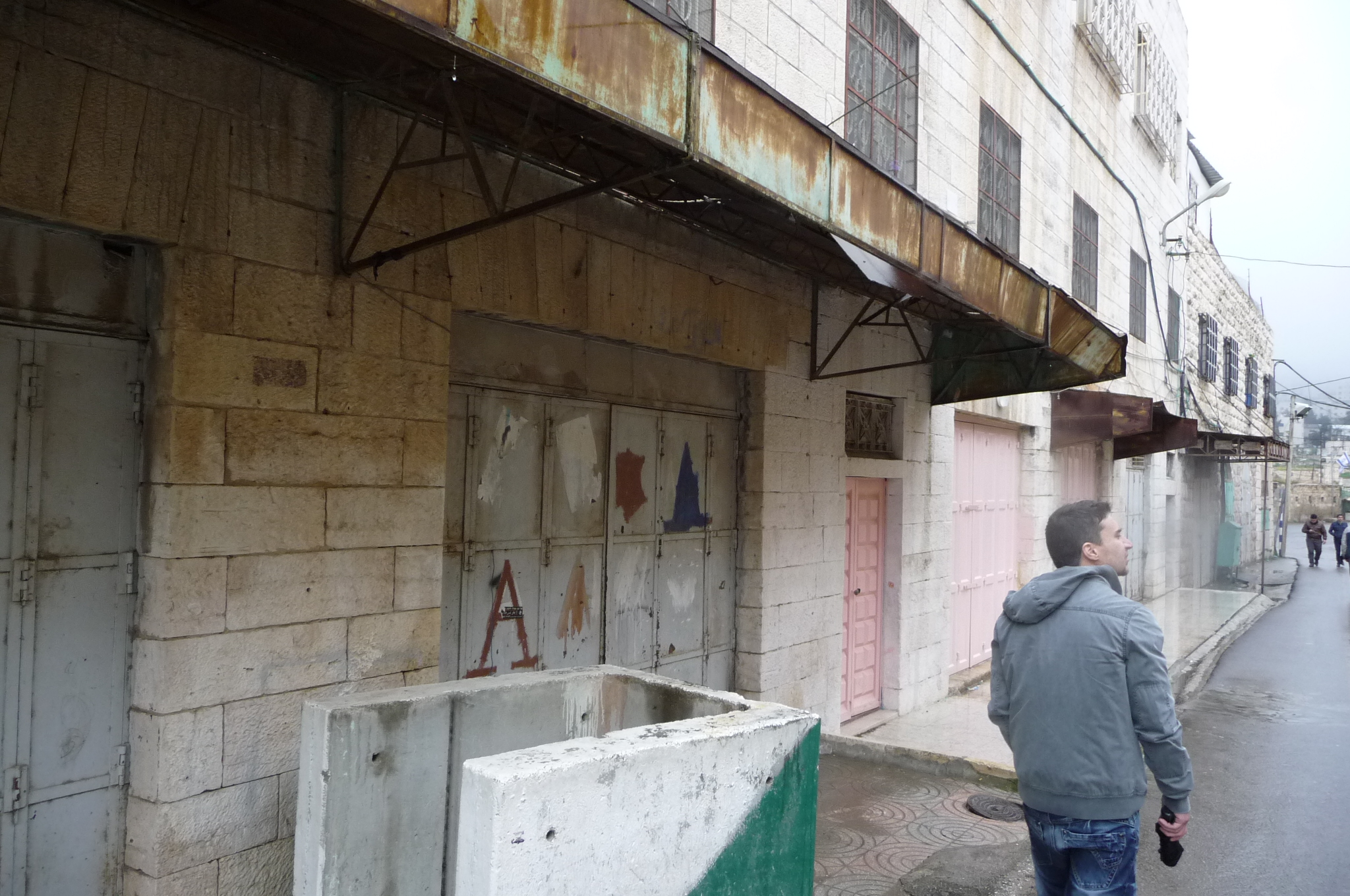
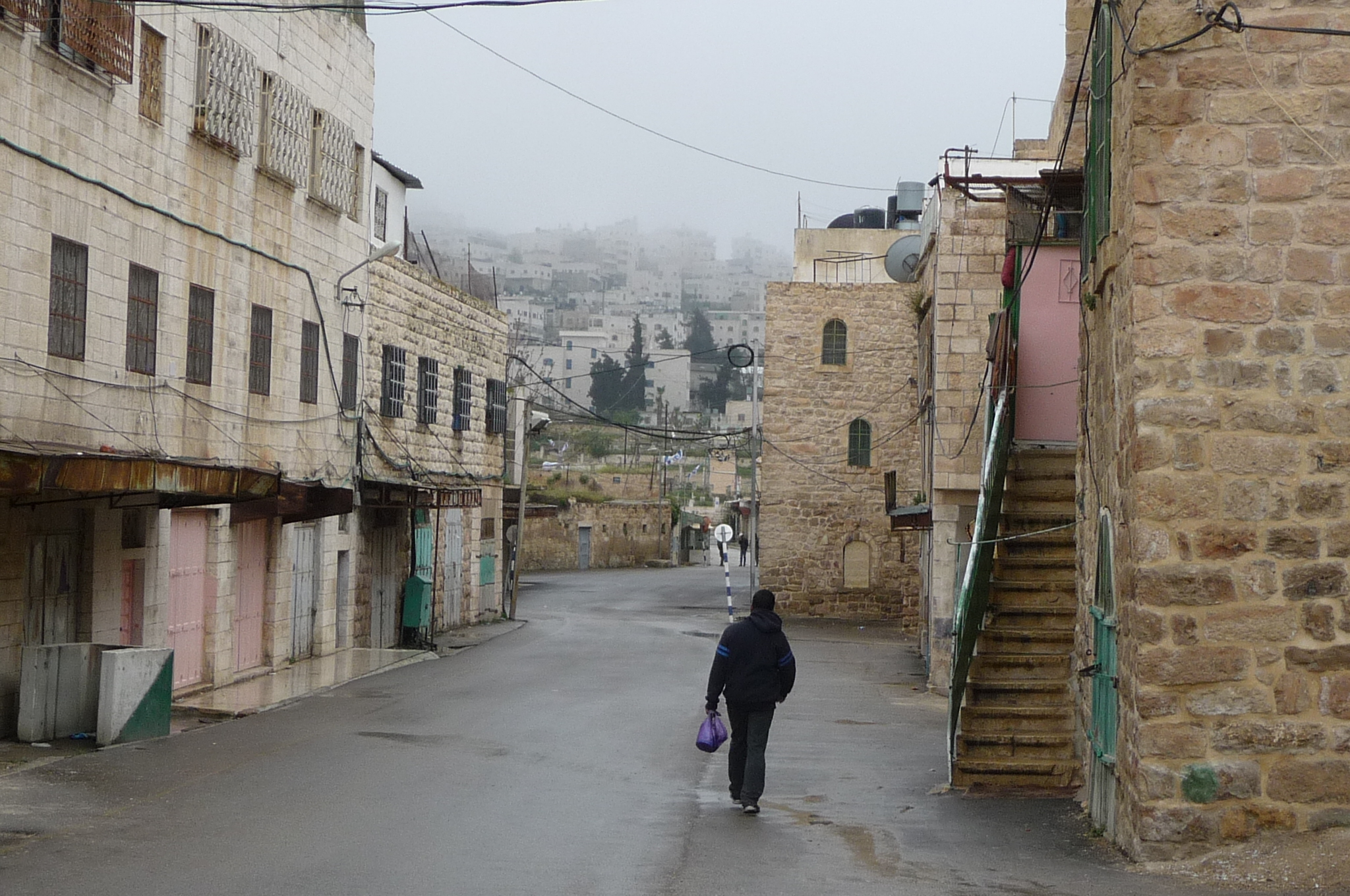
P1120329 P1120328

These two pictures are on Shuhada Street which you can see is virtually empty now.

There are about four Palestinian shops that remain open on Shuhada Street. No one knows exactly why they are allowed, but Sammy speculated that it was to deflect from the impression that the entire street had become a ghost town.

P1120322

What about the Palestinians whose houses and shops face Shuhada Street? Their doors have been literally welded shut, some while the inhabitants were still inside. Some of the stalwart Palestinians who remain have constructed elaborate means of exiting through back windows, and erecting ladders to climb over roofs and get to the part of the old city in which they are allowed. As life has become unbearable for these Palestinans, many have abandoned their homes. Israeli law supposedly prohibits settlers from occupying them, but that hasn’t stopped them from trying.

Not only were the indigenous inhabitants banned from the main street of their city, many side streets are now blockaded because they traverse Shuhada Street. What this means is that in many cases, a route that would have been 100 meters or so now involves traversing a route of 4-5 kilometers.
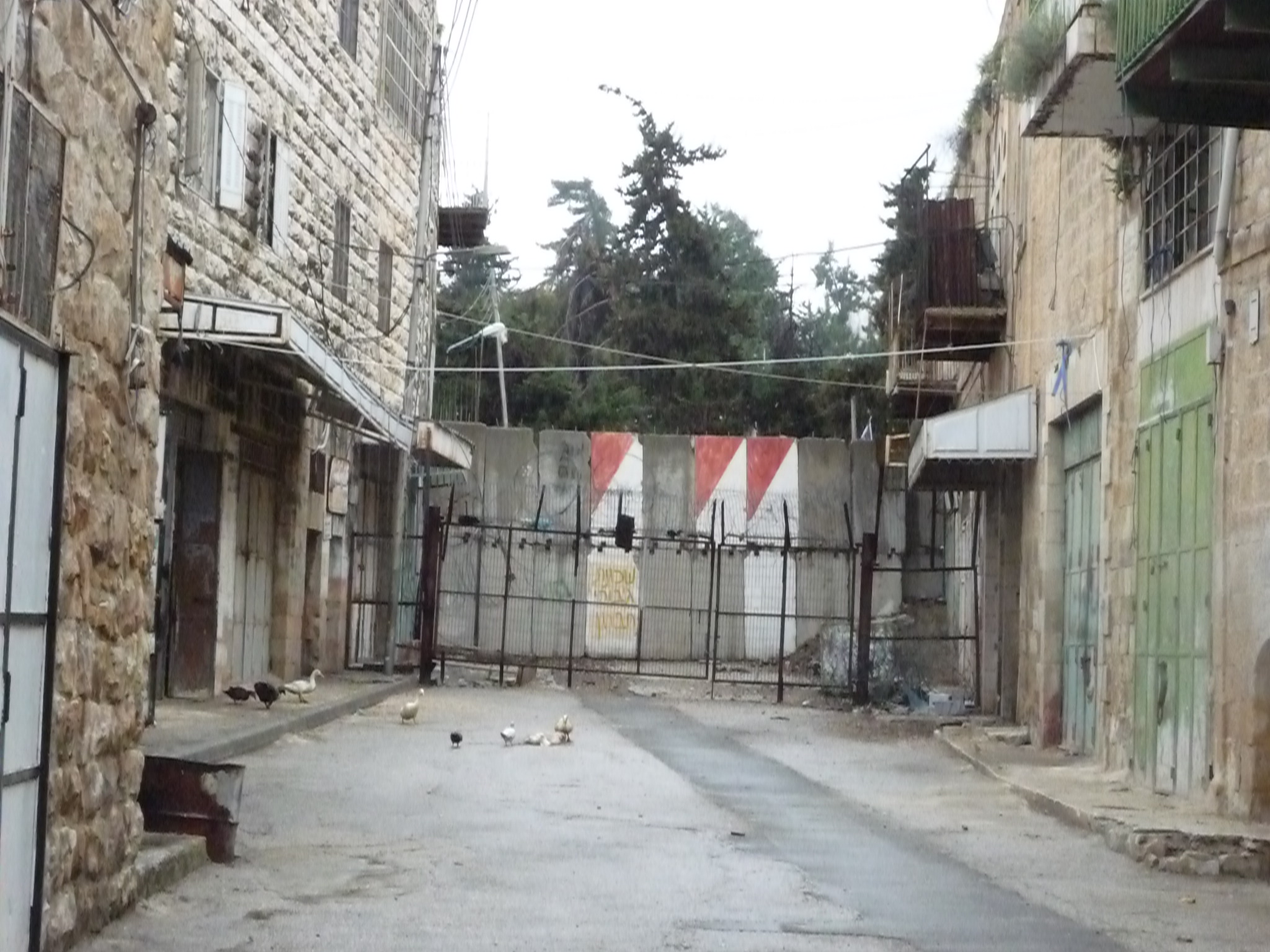
P1120323

More about the history of Hebron here, including a section talking about the remarkable strides HRC has made in restoring the old city.
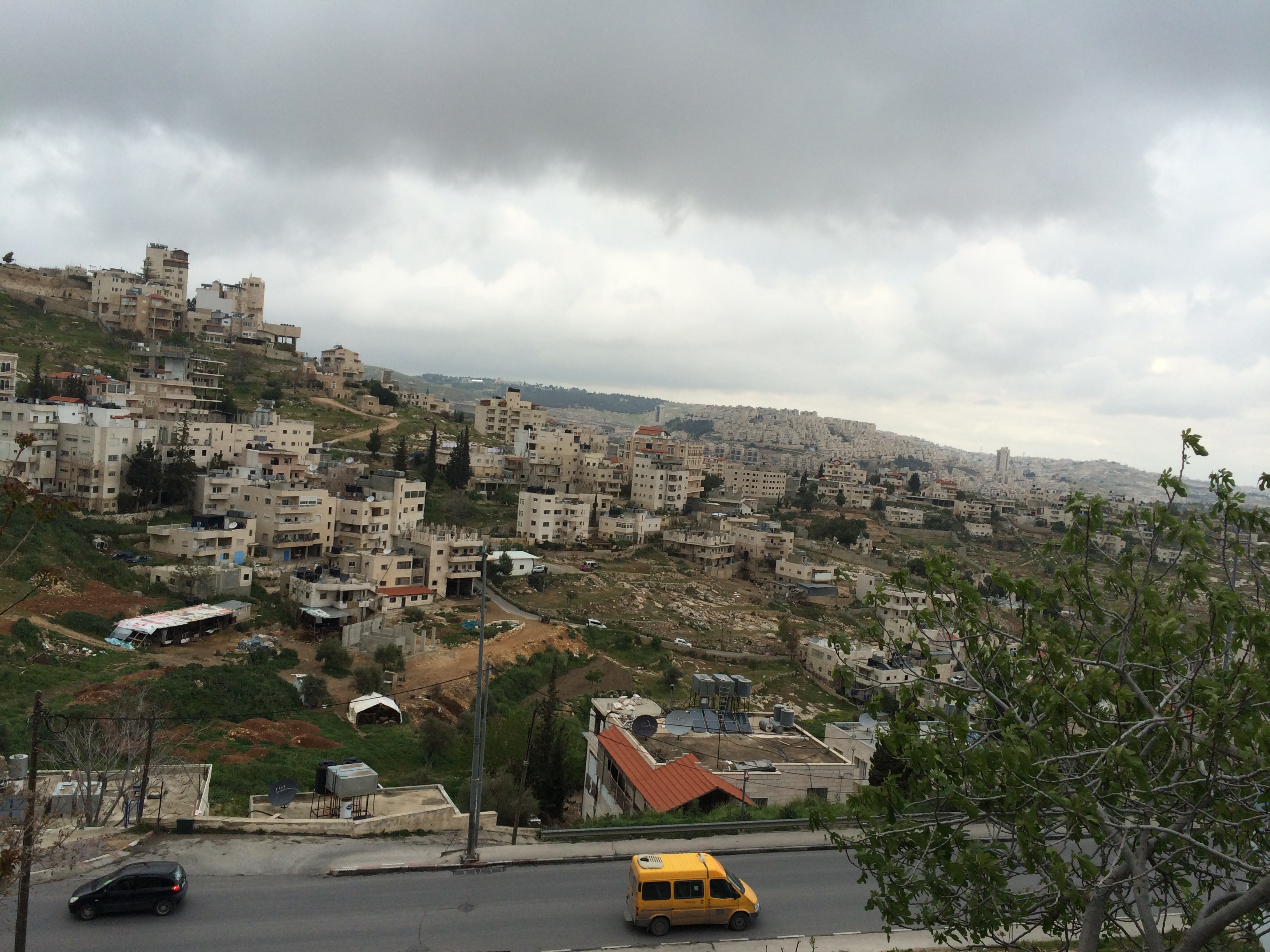
http://palestine-studies.org/jps/fulltext/41377

FIRST DAY IN HEBRON – GETTING THERE

The day after my arrival in Bethlehem, I was off to Hebron for my introduction to the Hebron Rehabilitation Committee. Getting lost, of course was the order of the day, but fortunately, there was an HRC person at the van drop off point to greet me.

IMG_0650

A word about public transportation in Palestine: none. What they do have are taxis, which are expensive and vans called Service (serveez). Even though Palestinians pay taxes, most are funneled through Israel and Israel frequently withholds the funds that are due Palestine at its whim; most recently when the Palestinian Authority had the hutzpah to seek membership in the International Criminal Court. Palestine also must pay Israel for all of its electricity and water, even though all of its water comes from the West Bank. This is a fact of life in an occupied territory – there’s no money for such luxuries as public transportation.

The Service are Caravan type vehicles all in school bus yellow. They typically have room for 7 passengers. When the van is full or near full, the driver takes off to the destination. Hebron is about 22 K (app 14 miles) from Bethlehem, and the ride takes about one-half hour and the charge is supposed to be a flat 9 shekels (about $2.50). Considering that the gross per capita income here is not much more than $3,000, that takes a big bite out of one’s pay check.

So, of course (in keeping with the trend I’ve set) I had troubles getting the Service. The first day, the Hebron drivers were apparently on strike, so I ended up paying for a cab which was much more expensive. Finding one for the return trip involved getting lost in the city of Hebron and finally figuring out where the Bethlehem bound Services were lined up. The second day, I waited at the corner where I was told Hebron bound Services pass. In theory, you can wave one down, and if there is space, they will happily stop to pick you up. After at least three passed, I finally took the hike to the bus station where I picked one up. Leaving Hebron this tie, a nice guy from HRC offered to walk me to the Hebron station, but it wasn’t 9 shekels, it was 15 because there was “a bad accident” and they had to take a different route. I was convinced that this was one of those “I have a special price for you” deals, and when I asked the driver if this price was just for me, everyone in the van snickered and assured me that the accident story was for real. Again, though, I was struck by how very expensive it is for people living on 3K a year to be paying this much to commute from work and school.

CHECKPOINT – IT’S A BREEZE LEAVING ISRAEL

After finally unloading the car, I got a cab to take me to the checkpoint between Jerusalem and Bethlehem. I had to ask several people before anyone seemed to comprehend what I was asking. I guess it’s not that common for women – or especially western looking women – to walk into the West Bank. As a matter of fact, when I got there, there was not a single woman in sight. There were dozens of Palestinian men, probably mainly workers who were going home from their jobs in Jerusalem to their homes in Bethlehem. Suffice it to say, I caught many strange glances. I was expecting to have to show my passport and be admitted. In fact, all that was involved was a walk though several turnstiles (installed to prevent a mob?), and a winding circuitous route through cement wall tunnels. It fell like going through a rat’s maze – walking probably ten times the distance required. I quickly snapped this photo, not wanting to be too obvious. You can see the wall and the watch tower and the caged area which is where you enter the maze. No problems at all leaving Israel. We’ll see what it’s like when it’s time to come back in. I was greeted by my host in his car who escorted me to my very comfortable home for a month in Bethlehem.

Déjà vu again – at Jaffa

The Holy Land Pilgrimage I attended last year immersed me in a group of 38 very different people with really just one common link – being Lutheran. I had never done a group tour before and was not at all sure it was going to be my cup of tea. To my pleasant surprise, I left the trip quite tearful having to say goodbye to so many wonderful people I had bonded with over those two weeks. One of the dearest of these was with Dorothy Beasley, a remarkable woman. She is a retired appeals court judge from the State of Georgia and has a lot of other impressive credentials like having served on the International Criminal Law Court. I can only hope that I will have as much spunk and half as many amazing stories as she does when I am her age. So, why I am talking about a pilgrimage from over a year ago?

Dorothy has a dear friend, Ilan Grappel who is a young Israeli whom she took under her wing when he was a law student at Emory (another one of her places of service). She was thrilled that he was able to meet us when we were in Jerusalem last year. We had a pleasant, albeit short meeting. Aside from the fact that Ilan is very bright and the even more interesting fact that he spent several months in an Egyptian prison while traveling there because they thought he was an Israeli spy, his mother plays viola in the New York Philharmonic. Anyway, when Dorothy heard of my trip back to the Holy Land, she immediately started e-mailing both Ilan and me to make sure that we arranged a meeting in Israel. I think that Ilan felt more a sense of obligation to Dorothy than any burning desire to meet up with me in following through with this.

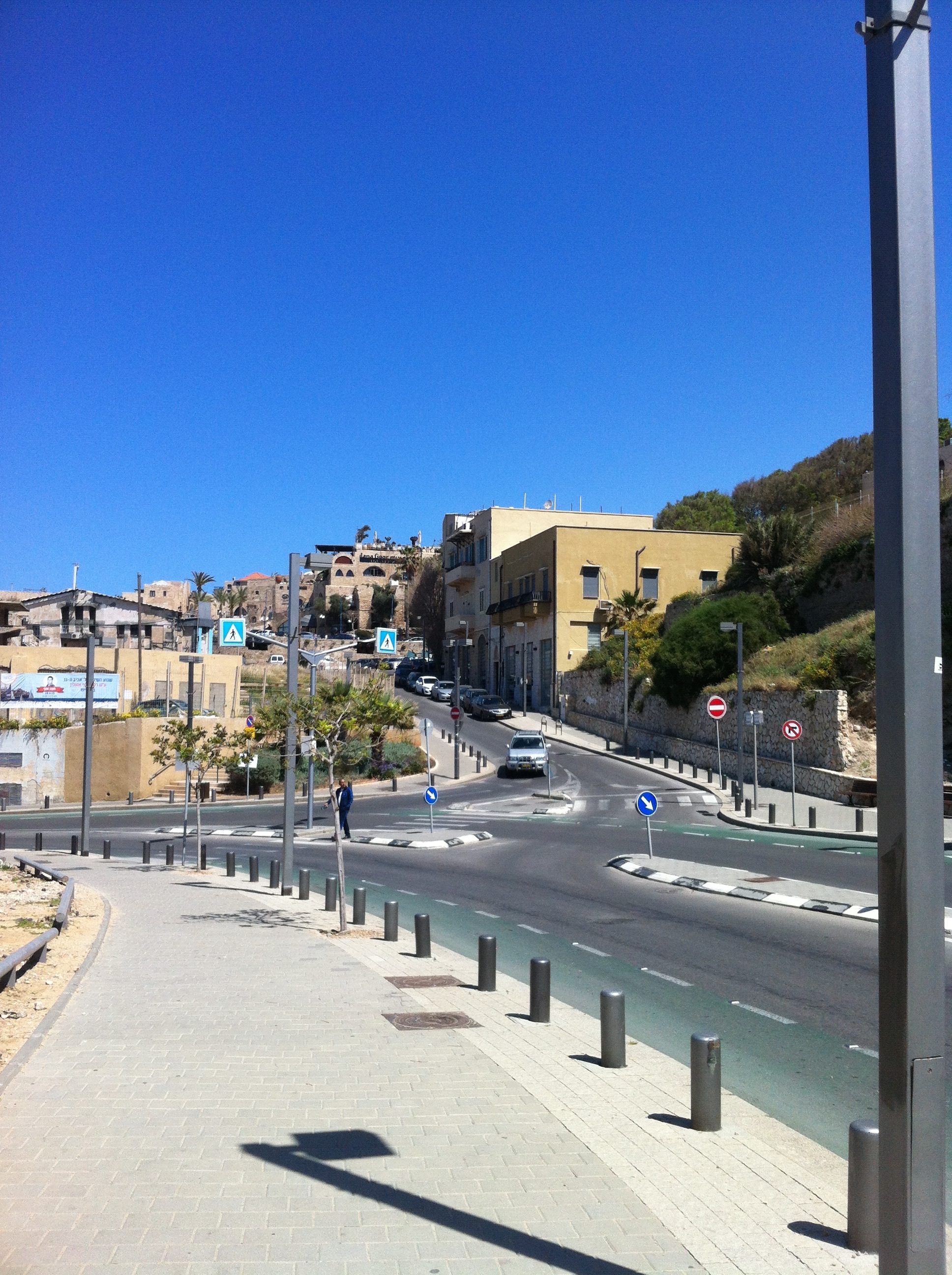
After I checked out of the Ruth Daniel Residence in Jaffa, Ilan met me and we had a beautiful stroll through old Jaffa and down to the port.  This is a view along the way. Image 2

The plan was to have lunch. As we wandered along the port, the one restaurant that looked appealing was the very one where we 39 pilgrims had our first meal upon landing in Israel. It was exactly the same crazy spread of probably 20 different little plates with various sauces (hummus and baba ganoush of course), salads and spreads. I had intention of retracing my steps from the last trip, but this was a very pleasant and unexpected exception. Aside from the annoying fact that I can’t eat pita bread because of a gluten intolerance, it was – again – quite delicious and the view can’t be beat.

The conversation with Ilan was interesting and challenging. I would say that in spite his liberal Americanized thinking he is a pretty hard core Zionist. We had quite a time sparring and I have to admit, he probably won the debate, just because he would usually end up throwing a “fact” at me which I could not immediately counter. At this point in my immersion in this conflict, that happens rarely anymore. and it made me realize, that I need to continue to do my homework. That said, the one thing he fell back on more than a couple of times was the old “why do you care about this conflict so much when [insert conflict of choice] is ever so much bigger” straw man. The example he used was the Indian/Pakistan conflict which resulted in the partition of India into two states. I readily admitted that I have limited knowledge about that conflict, although it is certainly much closer to resolution that this one, and actually did result in a real partition rather than a a prolonged occupation); but also that I wasn’t terribly interested in it either (You can only focus on so many things at time). But the most important justification is that I feel that as an American, I have a particular obligation to be activist on this issue because of the obscene amount of aid that my government, on my tax dollar gives Israel every year (over $3 billion last year, plus another $1/4 billion DURING AND IN SUPPORT OF the assault on Gaza this summer. This is all handed over with no strings attached as Israel continues stealing land that once was regarded by virtually the entire world as the future Palestinian State. And nearly all of our elected members of the US Congress are bought and sold by lobbying groups, among which AIPAC is one of the very richest and strongest. That is why I have no shame whatsoever in putting my full focus on this conflict and not others, as horrible as they may be. All this said, Ilan was very decent, he did not get upset or call me any names and, I dare say, would have continued the debate, as long as I had wanted. That’s a lot more than I can say for quite few other people who I’ve engaged with on this topic.

After departing from Ilan, I had another nightmare ride in my rental car. Getting out of Tel Aviv was fairly easy, but Jerusalem was as bad or worse as the previous day. I think it took me a full hour of navigating in the dark (my mental fog, that is to say) in the City before I finally found the car rental. I was saying my hallelujas when I finally got that thing parked, dent-free and deposited the keys. Again, my advice to anyone who comes to Israel is, do not rent a car if you’re planning to spend a lot of time in the cities.

Elder Law in Haifa

After an excellent night’s sleep (my jetlag remedy: DO NOT SLEEP until bedtime and pop some melatonin prior to hitting the hay) and a really wonderful Israeli breakfast (that was one of the reasons I chose Ruth Dan Residence), I set off for Haifa. Once again, the drive was pure hell. Getting out of Tel Aviv was awful city driving even though I knew where I was going this time. Once in Haifa, though, it was déjà vu. I was totally without a clue as to where to find Haifa University and the first two times I stopped for directions, the first question was “Do you have NIS (gps)? And I’m thinking, “No, I don’t have GPS! Why do you think I’m asking for directions?” My other dilemma is that I ended up in a toll booth to go under Mt. Carmel and still had not found a bank at which to change money, so no shekels to pay. Fortunately, they took my credit card, and this one had not yet been cancelled. My other misfortune was not having had the foresight to notify my bank and credit card companies of my travels, so both my ATM and my main credit card had been blocked. Fortunately, Travelocity seemed to have put two and two together and didn’t cancel that card. Anyway, enough of my trivial travails – lessons learned/words from the not very wise.

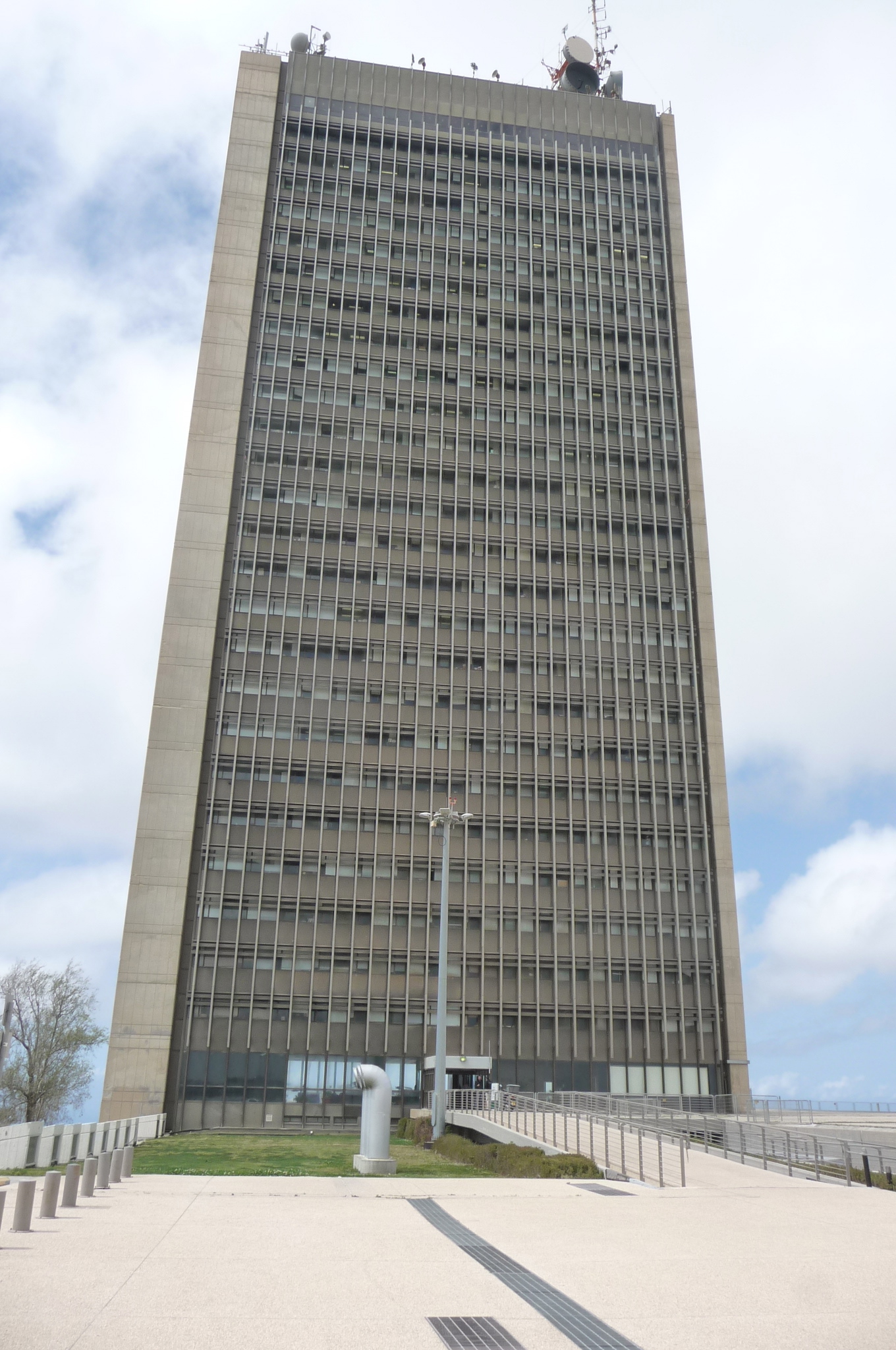
So, after having given myself what I thought was more than ample time to get to my appointment with Professor Israel Doron (Izzy as he likes to be called), I was way late, having been lost and then having huge difficulty finding a parking spot at University of Haifa. Getting in was also interesting, I was given a grilling at the gate before being allowed entry and once in, there was a feeling of being in a fortress. Izzy’s building was the biggest building on campus – a huge high rise that loomed into the sky. The University sits on top of Mount Carmel. It seemed like it was in its own little biosphere. Clouds were swirling low overhead and there was a fierce wind.

P1120291

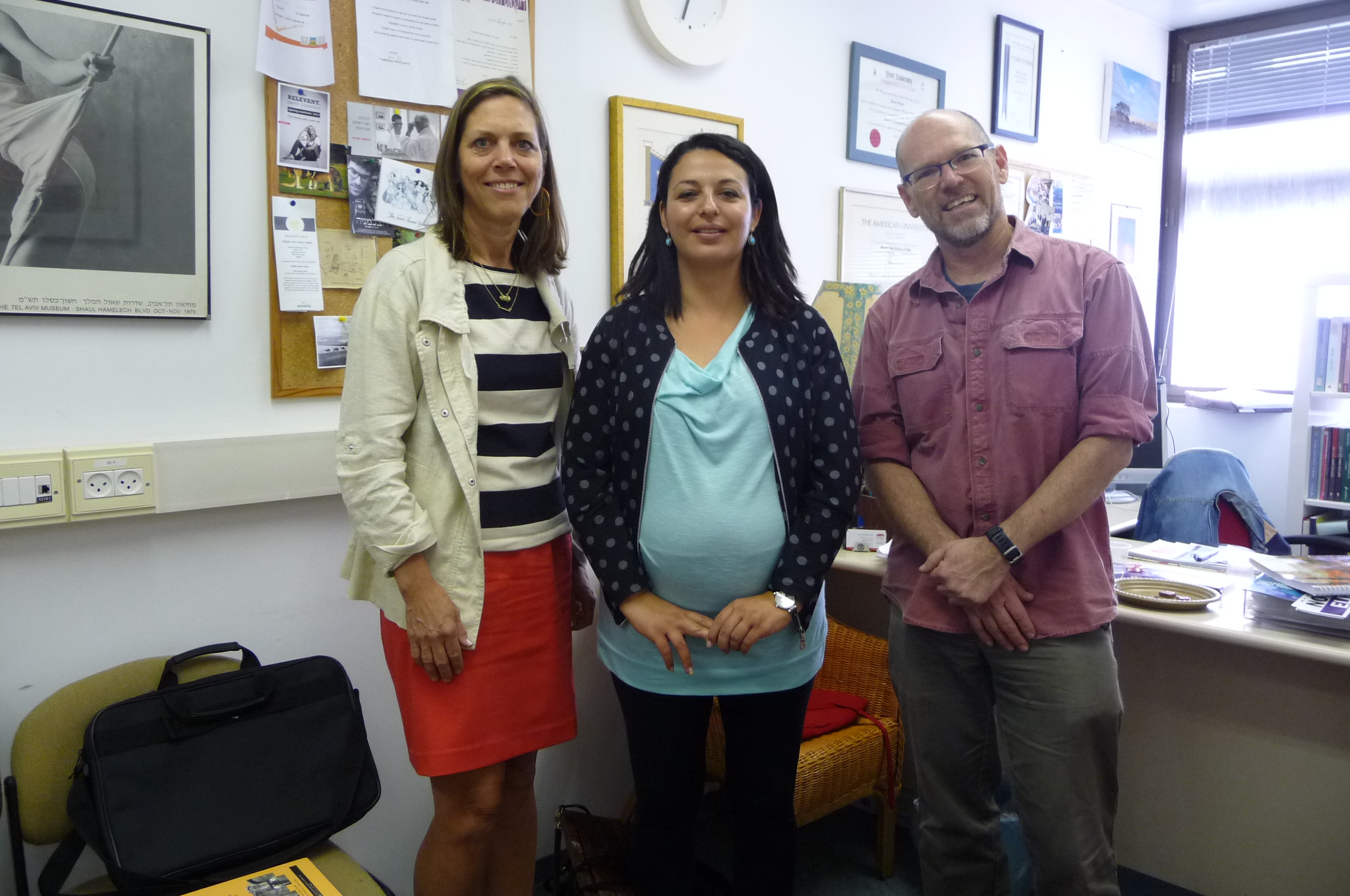
In spite of my tardiness, I was greeted very cordially by Izzy and his colleague Carmit Shay. The two of them peppered me with questions about elder law in the states and I reciprocated with my own questions. The big take away for me is how much better Israel is at taking care of their elderly than is the US. That said, like in the US, they are being threatened with cutbacks in the face of the fiscal crunch that is affecting a huge portion of the lower and middle classes. In sum, I was very happy with the meeting, and I’ll be submitting a short article to the National Academy of Elder Law’s monthly news magazine.

P1120287

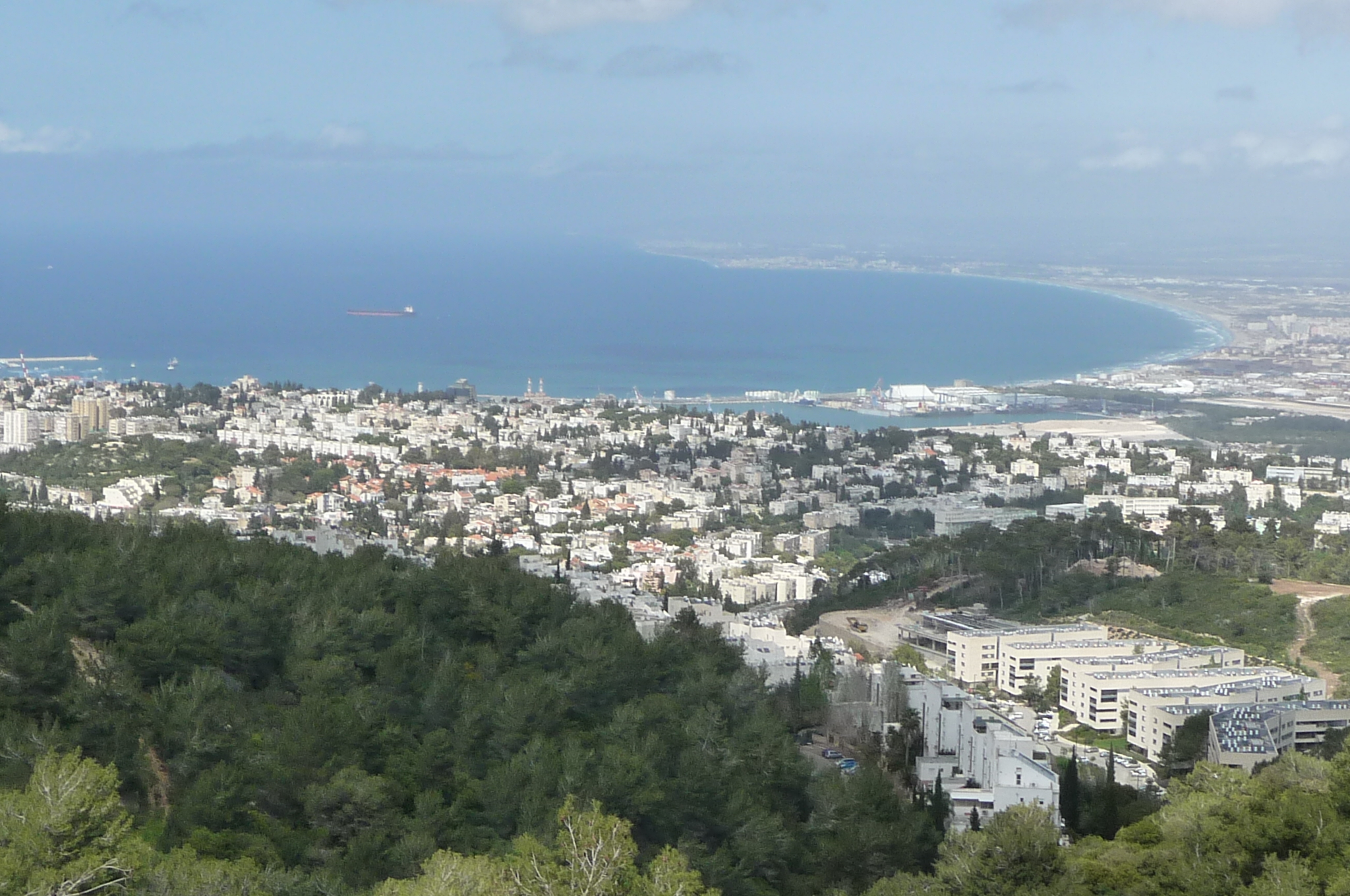
Parts of the drive to and from Haifa were breathtaking. I was able to pull over and snap this shot overlooking Haifa and the Mediterranean as I was leaving the university which gives a sense of how high up it is.

P1120294

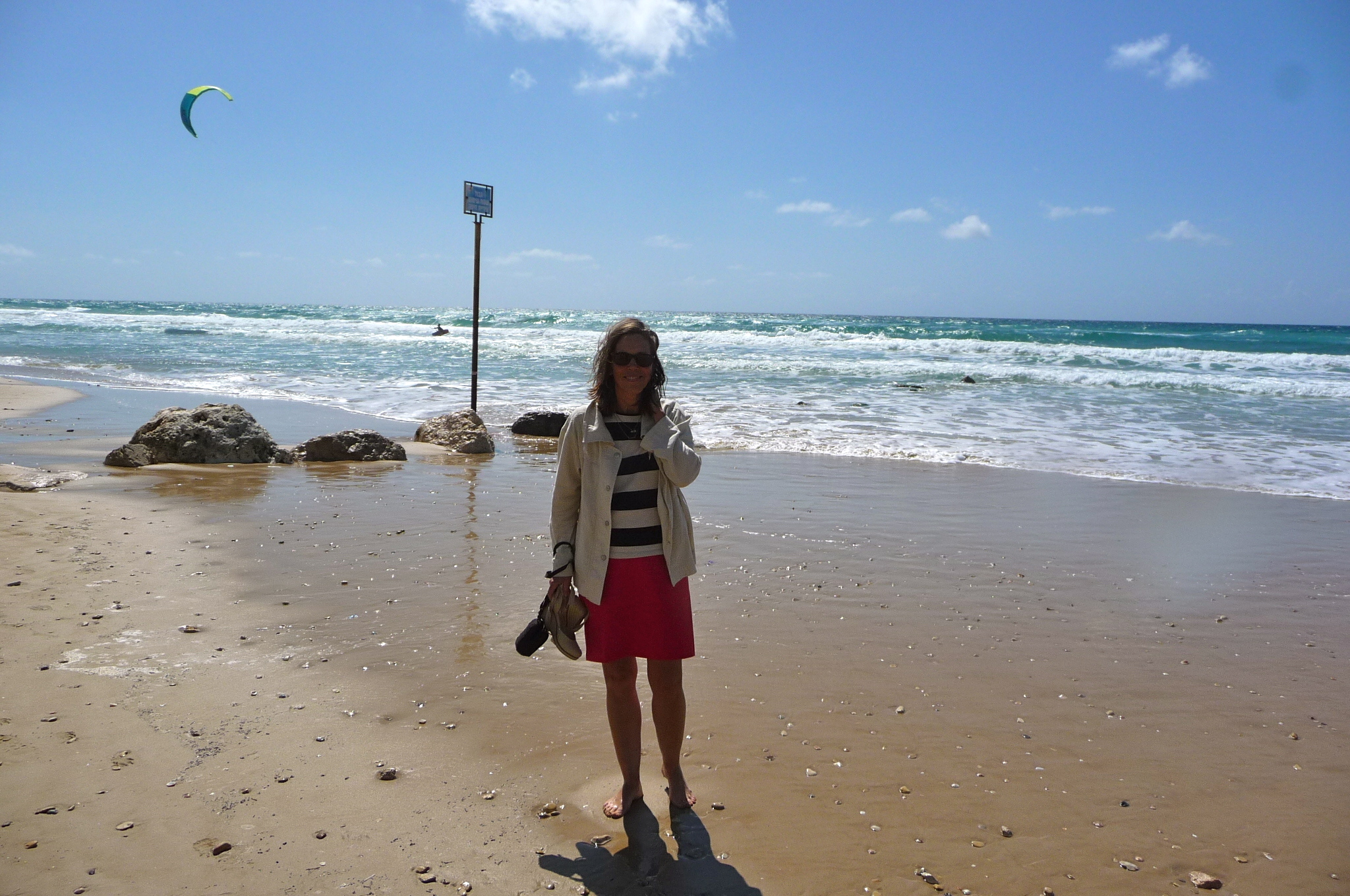
I was also able to pull over and get put my toes in the sea. The water was warmer than I expected for this time of year. For a Mainer, I would say it was swimmable, although there wasn’t a person in sight venturing into the water other than the wetsuit clad sail surfers.

P1120299

Once again, Palestine on my mind, my thoughts turned to all of those people living the West Bank who have never been to the Mediterranean and may never have the opportunity to dip their toes in its beautiful waters because they are not allowed. And even though Gaza has a nice stretch of Mediterranean coast, few people from the West Bank are even allowed entry there, in spite of it being the other Palestinian territory.

Tel Aviv and Jaffa

I arrived in Tel Aviv yesterday. Getting through immigration was nerve wracking. The lines for “foreigners” were really long and slow and several people in front of me in my queue were waved off to some room to the side after long questioning at the window. One was a young couple with backpacks who I imagine were setting out to do some sort of peace team (CPT, etc.) intervention in the West Bank. If they know that’s what you’re heading to do, chances are you will not be allowed in. I have no idea whether they ultimately made it through or not, but it was enough to get my nerves up. I was worried that I would be grilled about returning to Israel as a non-Jew after having just done the Holy Land Trip less than a year ago. I had my alibi down pat. I told the man questioning me that I was there as an elder law attorney, gave him my credentials as a board member of different elder law groups and told him about my planned meeting with a professor of elder law in Haifa. That was all cool, and easy for me, because it was true. He then asked me if I have friends in Israel. I do, and actually have plans to meet with one tomorrow, but wouldn’t you know it, the brain freeze set in and I found myself completely without his name. I stuttered and stumbled and finally pulled out my little notebook and told him. At that point, he seemed more amused than anything and waved me through. Phew!

My rough nerves were not to be soon quelled. I had decided that renting a car would be the best bet for my first couple of days in Israel. Well, that turned out to be not the best choice. First of all, my international calling plan did not include data so I was without GPS. Anyone who knows me, knows that if there is a way to get lost, it will find me, and I am totally dependent on GPS. So, I pretty much winged it getting to my hotel which is in Jaffa. Jaffa lies on the Mediterranean just below Tel Aviv. The signs to Tel Aviv from the airport were easy enough to spot and follow, but Tel Aviv is BIG city. Once inside Tel Aviv, all I knew was that I needed to head to the sea, and the sea was west as was the setting sun. Believe it or not, that did finally get me there with just one stop along the way to ask for directions, but rather than as the crow flies,   probably more like tacking a sail boat when your going into the wind.

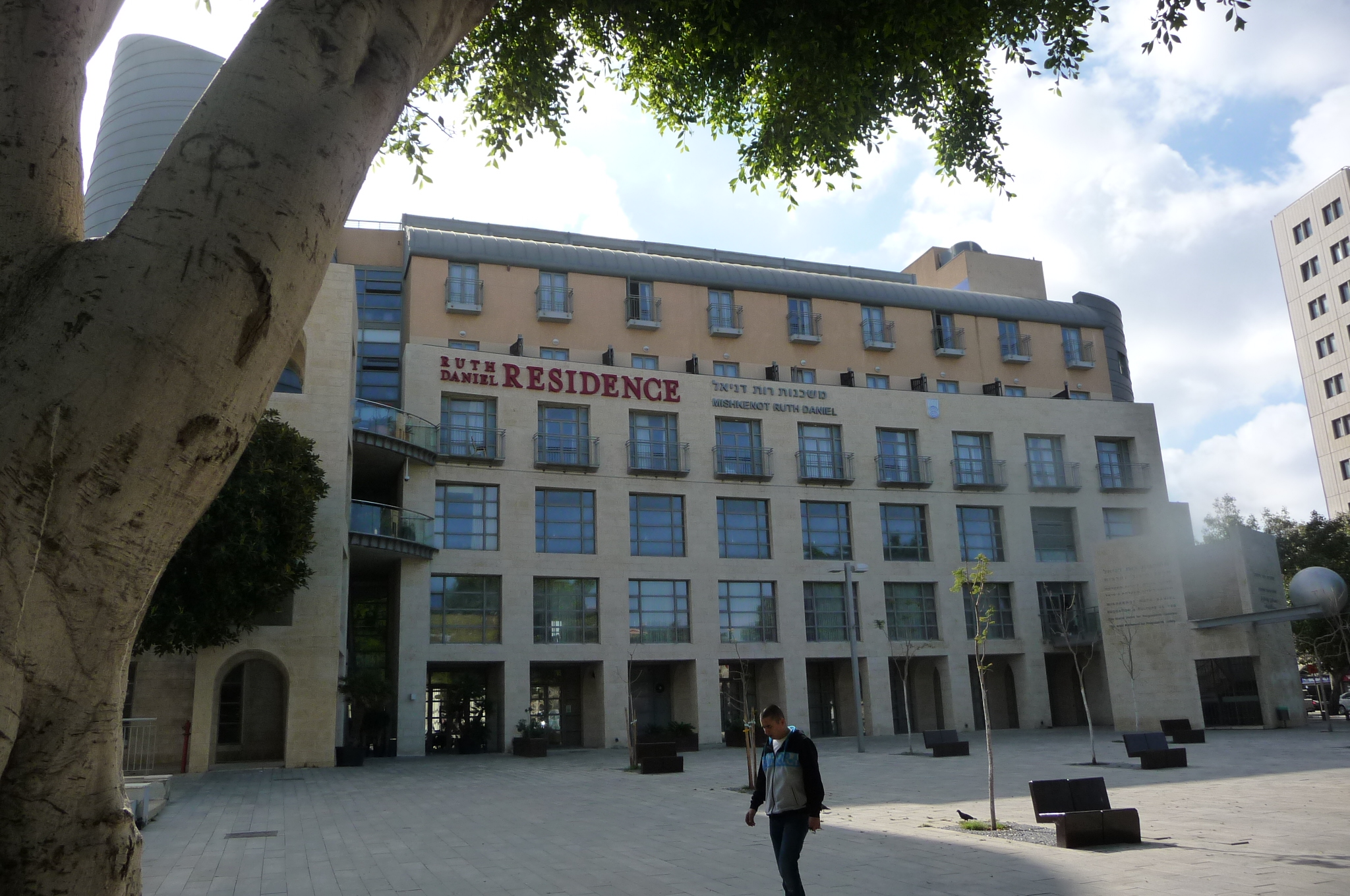
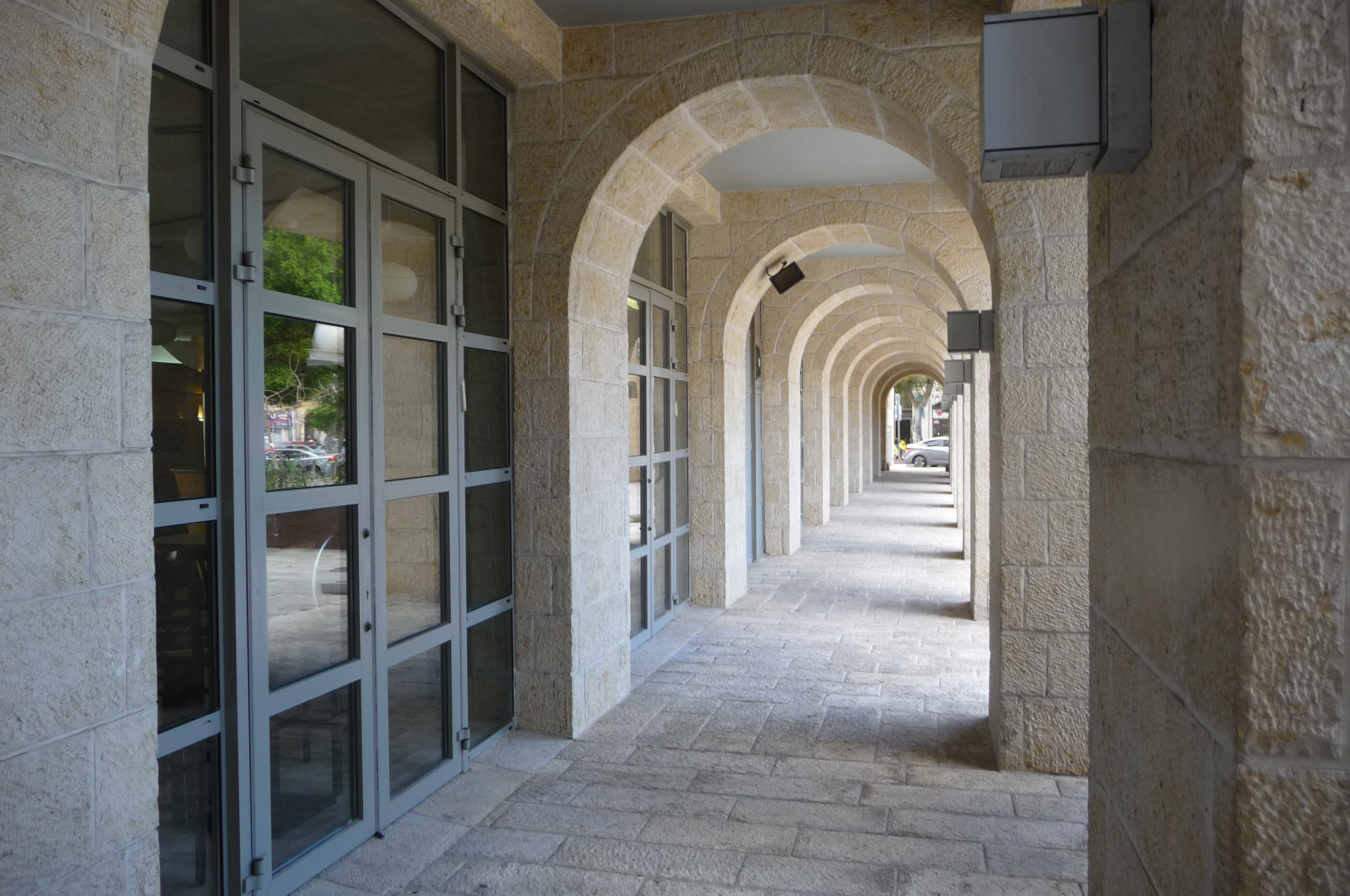
I had been to Jaffa last year with my Living Waters tour group, so I didn’t feel I needed to take the time to see the sights, although it would have been lovely to do so. My hotel, Ruth Dan Residence is an architecturally interesting, older building. It’s comfortable, but not fancy and has a hostel feeling to it.

P1120304

P1120307In fact, it is quite inundated with teenagers on group tours. I was chatting last night with some American kids who were here for some sort of a physics competition. When I first arrived, there was also a big hoopla going on in the cafeteria that was apparently for some Tel Aviv City celebration. There was loud music reverberating through the entire open stairway. The music sounded very Arabic to me and at one point there was even a woman feigning to belly dance. I think she might have had one too few, but the crowd seemed to enjoy it. In fact, the crowd seemed to be having a lot of fun. Maybe it was my jetlag, but oddly, that made me sad.

It reminded me of a conversation I had with my daughter, Sophie about a week ago when she was referring to cultural misappropriation. This is a term I had heard, but never really conceptualized.   In essence, it is the notion of adopting aspects of an indigenous culture as one’s own. So, what’s wrong with that, anyway? Serendipitously, here is an article I stumbled upon shortly after the conversation with my daughter about belly dancing. In my opinion, this woman is taking the notion way too far, to the point of giving sardonic bite to the term “politically correct.”  http://www.salon.com/2014/03/04/why_i_cant_stand_white_belly_dancers/

But, watching these happy Israelis partying down with Arabic music topped off by a woman attempting to belly dance to it really got to me. For those of you who don’t know, Jaffa was probably the most bustling city of Palestine before the partition creating Israel. It was a port city with a thriving middle class. Tel Aviv literally grew on top of it. There are many stories, movies and tales – all based on truth – of how Palestinians were routed out of the city by the early Jewish forces, most of them never to be allowed to return.  One of my favorites is The Salt of the Sea – a fictional but very realistic account. http://en.wikipedia.org/wiki/Salt_of_this_Sea (you can rent it at Netflix)

The old city of Jaffa has been carefully restored and retains much of the old Palestinian character, but that was done in deference to the Biblical importance and tourism rather than to preserve Palestinian culture.

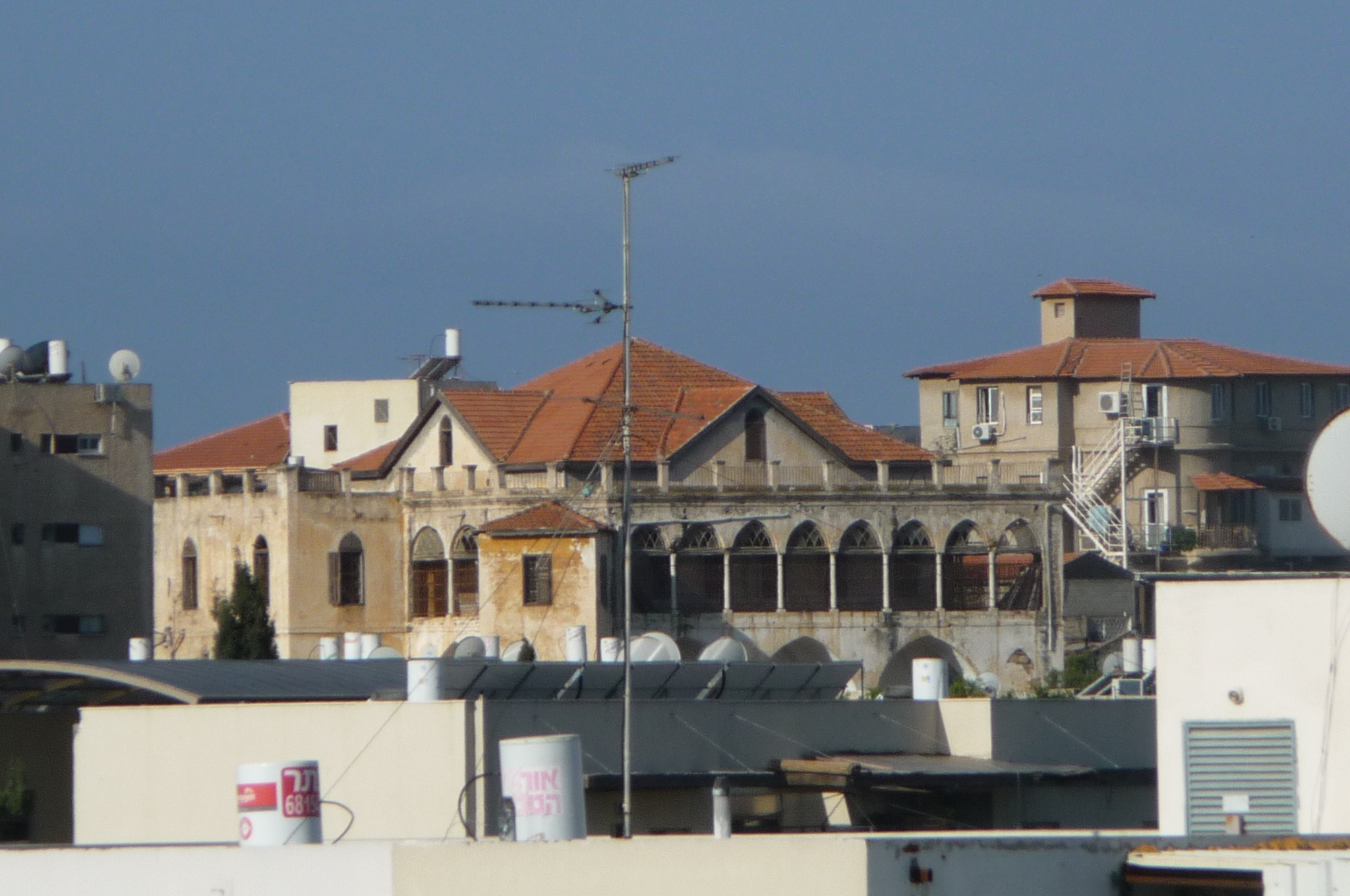
To the contrary, the ongoing trend since the creation of Israel has been to erase traces of the people who were there before – to “de-Arabize” the country.This is also from the vista of the balcony of my room. I zoomed into what appears to be an old Palestinian residence. It is likely now inhabited by Israelis. P1120302I am sure I will be writing much about that particular issue, so I’ll leave it at that for now.

Another part of my sadness was watching this large group of Jewish people really enjoying themselves oblivious, I am quite sure, about anything remotely akin to what I was feeling. They are here now. They own this place. It is their home. In spite of cultural misappropriation, they certainly have their own culture to claim. Much of what I see in Israel is lovely and admirable. If I could have a wish it would be that each and everyone of them could spend a couple of weeks in the West Bank living among Palestinians, without fear; that they would experience first hand the hospitality and beauty of Palestinian culture and experience Palestinians as people rather than “the other” or worse “the enemy;” and that a light bulb would go off in all of their heads about how their presence here was paid for, in large part, by the Palestinians whose lives were upheaved by the formation of Israel and those whose live their government continues to control.

In my opinion, this woman is taking the notion way too far, to the point of giving sardonic bite to the term “politically correct.” LINK

But, watching these nice Jewish people partying down with Arabic music topped off by a woman attempting to belly dance to it really got to me. For those of you who don’t know, Jaffa was probably the most bustling city of Palestine before the partition creating Israel. It was a port city with a thriving middle class. Tel Aviv literally grew on top of it. There are many stories, movies and tales – all based on truth – of how Palestinians were routed out of the city by the early Jewish forces, most of them never to be allowed to return. The old city of Jaffa has been carefully restored and retains much of the old Palestinian character, but that was done in deference to the Biblical importance and tourism rather than to preserve Palestinian culture. To the contrary, the ongoing trend since the creation of Israel has been to erase traces of the people who were there before – to “de-Arabize” the country. I am sure I will be writing much about that particular issue, so I’ll leave it at that for now.

I know that  picture is worth a 1,000 words, but I haven’t figured out how to transfer pictures from my iPhone without data service or if it’s even possible. I do have camera pics, however, for my next post about Haifa.

Another part of my sadness was watching this large group of Jewish people really enjoying themselves oblivious, I am quite sure, about anything remotely akin to what I was feeling. They are here now. They own this place. It is their home. In spite of cultural misappropriation, they certainly have their own culture to claim. Much of what I see in Israel is lovely and admirable. If I could have a wish it would be that each and everyone of them could spend a couple of weeks in the West Bank living among Palestinians, without fear; that they would experience first hand the hospitality and beauty of Palestinian culture and experience Palestinians as people rather than “the other” or worse “the enemy;” and that a light bulb would go off in all of their heads about how their presence here was paid for, in large part, by the Palestinians whose lives were upheaved by the formation of Israel and those whose live their government continues to control.

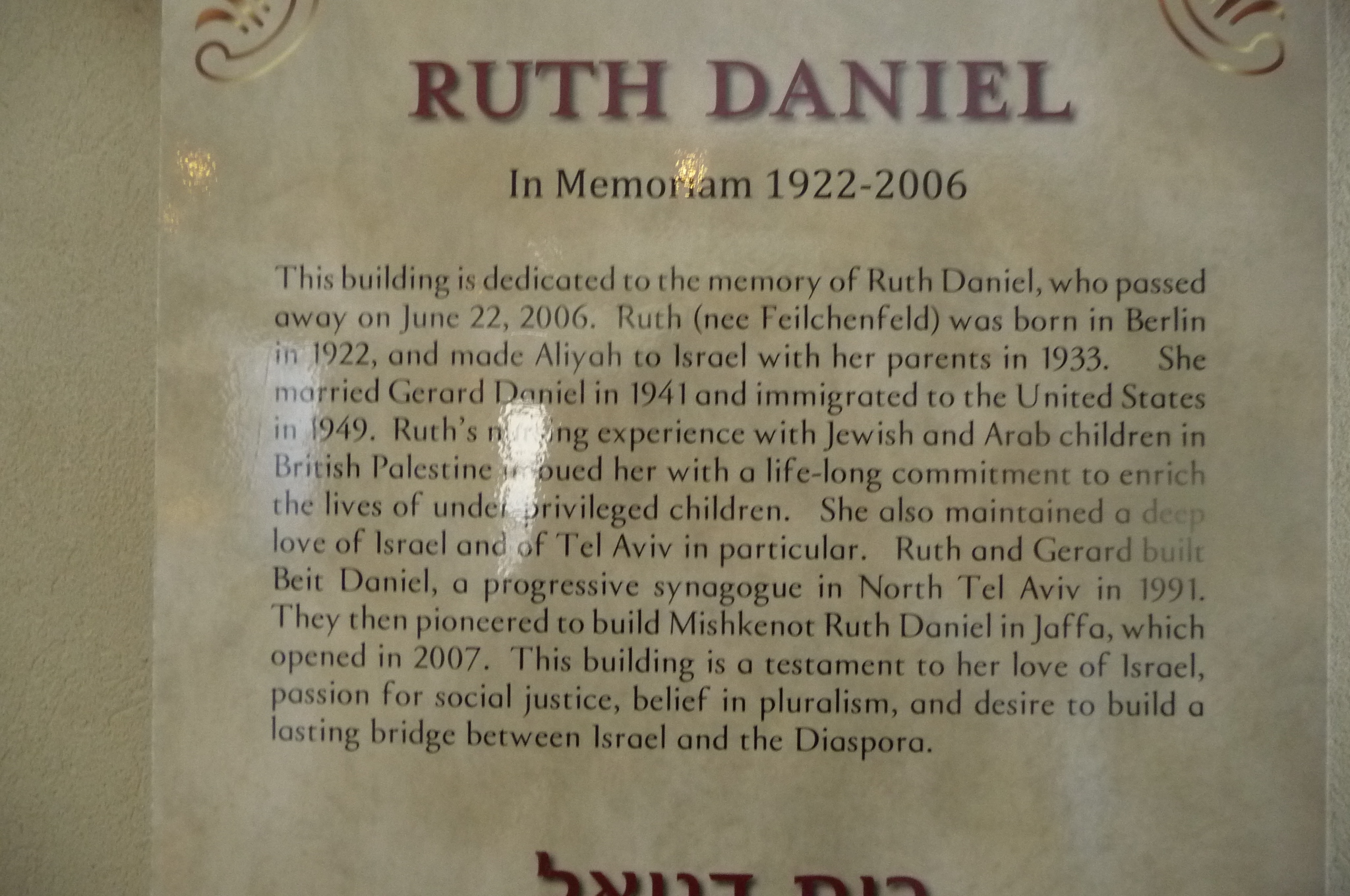
After note: As I prepare to check out of the Ruth Dan Residence, and having been curious about who Ruth Dan is/was I found this plaque in the lobby.  How apropos to my journey.  P1120305